

Description
ABT-089 HCl Nootropic Powder







| CAS Number | 161416-61-1 |
| Other Names | ABT-089 dihydrochloride, ABT-089, Pozanicline |
| IUPAC Name |
2-Methyl-3-[(2S)-pyrrolidinylmethoxy]pyridine dihydrochloride
|
| Molecular Formula | C₁₁H₁₆N₂O.2HCl |
| Molecular Weight | 265.18 |
| Purity | ≥99% Pure (LC-MS) |
| Liquid Availability | N/A |
| Powder Availability |  N/A |
| Gel Availability | N/A |
| Storage | Store in cool dry environment, away from direct sunlight. |
| Terms | All products are for laboratory developmental research USE ONLY. Products are not for human consumption. |
What is ABT-089 HCl?
ABT-089 is a synthetic nootropic compound that has been studied for its potential cognitive-enhancing effects through its activity as a selective modulator of neuronal nicotinic acetylcholine receptors (nAChRs), particularly the α4β2 receptor subtype. These receptors play an important role in regulating neurotransmission, attention, memory formation, and overall cognitive performance. By influencing acetylcholine signaling in the brain, ABT-089 may enhance communication between neurons and support processes involved in learning, focus, and information processing. Research has investigated its potential use in conditions associated with cognitive dysfunction, including attention deficits and neurodegenerative disorders, due to its ability to improve cognitive performance while producing fewer side effects compared to traditional nicotinic compounds.
Main Research Findings
1) In an animal model of Parkinson’s disease, ABT-089 was found to reduce dyskinesia induced by L-dopa therapy.
2) Administration of ABT-089 was shown to effectively treat cognitive disorders without inducing adverse gastrointestinal and cardiovascular side effects.
Selected Data
1) The study conducted by Zhang et al investigated whether two selective β2-containing nicotinic acetylcholine receptor (nAChR) agonists, ABT-089 and ABT-894, could reduce L-dopa-induced dyskinesias (LIDs) in a nonhuman primate model of Parkinson’s disease. The researchers selected these compounds because previous evidence suggested that stimulation of specific nicotinic receptor subtypes could reduce abnormal involuntary movements associated with chronic L-dopa therapy. The experiment used thirty-three squirrel monkeys that were at least five years old, consisting of fifteen males and eighteen females. After arrival, the animals underwent a thirty-day quarantine period according to regulatory guidelines and were maintained in a controlled environment with a twelve-hour light/dark cycle, regulated temperature and humidity, and access to food and water [1].
Before Parkinsonian symptoms were induced, the monkeys were trained for several weeks to perform a series of behavioral tasks that would later be used to evaluate motor impairment. These assessments measured several Parkinson-like characteristics, including spatial hypokinesia, body bradykinesia, manual dexterity of both hands, balance, freezing behaviors, and action tremor. Each category was rated from zero, representing normal function, to four, representing severe impairment, with the combined scale allowing researchers to monitor disease progression and treatment effects. After baseline training, the monkeys were rendered Parkinsonian using subcutaneous injections of the neurotoxin 1-methyl-4-phenyl-1,2,3,6-tetrahydropyridine (MPTP), which selectively damages dopaminergic neurons and produces symptoms resembling Parkinson’s disease. The animals first received 2.0 mg/kg of MPTP and were allowed three to four weeks to recover from systemic effects before receiving a second dose of 1.9 mg/kg. Parkinsonian symptoms were assessed several weeks after MPTP exposure and were continuously monitored throughout the study before and after L-dopa administration.
Once Parkinsonism was established, the monkeys were treated with L-dopa combined with carbidopa to induce stable dyskinesias. L-dopa was administered orally at a dose of 10 mg/kg with 2.5 mg/kg carbidopa twice daily, five days per week, with doses separated by approximately 3.5 hours. Dietary conditions were controlled to improve drug absorption, with fruit and vegetables provided earlier in the day and additional food later. Dyskinesias were evaluated through video recordings collected before and after L-dopa treatment. A blinded observer scored dyskinetic behaviors every thirty minutes using a scale ranging from zero, indicating no dyskinesias, to four, indicating severe generalized and disabling dyskinesias. Scores were averaged weekly to provide consistent measures of abnormal movements [1].
Following the development of stable LIDs, the monkeys were separated into two experimental groups. Set A contained seventeen animals that had previously received nicotine or other nAChR drugs, making them nAChR drug-primed, whereas Set B contained sixteen animals that had not previously received nicotinic treatments and were considered drug-naïve. Within each set, monkeys were assigned to vehicle-treated groups, nAChR agonist-treated groups, or nicotine-treated groups, with nicotine serving as a positive control. Groups were balanced according to sex and baseline dyskinesia severity [1].
ABT-089 treatment was administered orally twice daily, thirty minutes before L-dopa treatment. Doses ranged from 0.01 to 1.0 mg/kg and were given for one to five weeks depending on the phase of testing. After completion of ABT-089 testing and a washout period, the researchers evaluated ABT-894 using doses ranging from 0.0001 to 0.10 mg/kg. Nicotine-treated monkeys received nicotine dissolved in flavored drinking water, gradually increasing to a concentration of 300 μg/ml to produce blood nicotine levels similar to those observed in moderate smokers. Researchers also examined whether drug effects persisted after treatment removal through washout periods.
Additional evaluations were performed to determine whether the drugs affected Parkinsonian symptoms, cognition, or receptor activity. Cognitive function was measured using an object retrieval task designed to assess prefrontal cortex-dependent inhibitory control. Receptor binding experiments were performed using rat striatal tissue to evaluate the ability of ABT-089 and ABT-894 to interact with α4β2 and α6β2 nAChR subtypes. Statistical analyses included analysis of variance, Bonferroni post hoc testing, Mann-Whitney testing, and t-tests. Overall, the methodology was designed to determine the therapeutic potential, dose response, duration of action, and safety profile of these nicotinic agonists as possible treatments for L-dopa-induced dyskinesias in Parkinson’s disease [1].
2) The study performed by the research team of Rueter et al reviewed the pharmacological characteristics, functional activity, neuroprotective potential, cognitive-enhancing effects, pharmacokinetic profile, and safety properties of ABT-089, a selective neuronal nicotinic receptor (NNR) modulator developed as a potential therapeutic compound for cognitive disorders such as attention-deficit/hyperactivity disorder (ADHD) and Alzheimer’s disease. Rather than conducting one single experiment, the researchers compiled and analyzed a series of preclinical investigations designed to characterize how ABT-089 interacts with different nicotinic acetylcholine receptor subtypes and how these interactions translate into biological effects. The overall methodology included chemical characterization, receptor-binding studies, in vitro functional assays, neurotransmitter release experiments, neuroprotection models, behavioral studies in animals, pharmacokinetic evaluations, and cardiovascular and gastrointestinal safety testing. These approaches were designed to determine whether ABT-089 could provide the beneficial cognitive effects associated with nicotine while avoiding many of nicotine’s undesirable side effects [2].
The initial portion of the investigation focused on the chemical properties and synthesis of ABT-089, formally known as 2-methyl-3-(2-(S)-pyrrolidinylmethoxy)pyridine dihydrochloride salt. The compound was characterized as a stable, nonhygroscopic crystalline powder with strong aqueous solubility and chemical stability across a wide pH range. Researchers described both the original synthetic pathway and a modified method developed to allow larger-scale production. After establishing chemical stability, the investigators examined receptor selectivity through radioligand binding assays. These experiments measured the ability of ABT-089 to interact with different NNR subtypes, particularly α4β2 receptors, which are highly expressed in the central nervous system and associated with cognition. Binding studies used rat brain membranes and human recombinant receptor systems to compare ABT-089 with nicotine. Additional assays examined whether ABT-089 interacted with other receptor families, ion channels, enzymes, or neurotransmitter systems to determine its overall selectivity profile.
Functional activity was investigated through multiple in vitro assays evaluating receptor activation, ion movement, and neurotransmitter release. Rubidium ion efflux experiments were performed using different cell models expressing nicotinic receptor subtypes to determine whether ABT-089 acted as an agonist, partial agonist, or antagonist. Researchers studied α4β2-containing receptors, ganglionic-like α3β4 receptors, and muscle-type receptors to compare central versus peripheral activity. Electrophysiological studies using Xenopus oocytes expressing human α7 nicotinic receptors measured receptor-mediated currents and evaluated how ABT-089 influenced receptor activation and desensitization. Additional experiments examined whether ABT-089 stimulated neurotransmitter release by exposing rat hippocampal synaptosomes and striatal tissue preparations to the compound and measuring acetylcholine and dopamine release. These studies were included because modulation of neurotransmitter systems is believed to contribute to improved attention, memory, and learning [2].
The neuroprotective properties of ABT-089 were assessed using cellular models exposed to toxic insults associated with neurodegenerative conditions. Primary cortical cultures and IMR-32 neuronal cells were pretreated with ABT-089 before exposure to damaging agents such as glutamate, amyloid-related toxicity, and other neurotoxic compounds. Cell survival was measured through lactate dehydrogenase release assays, which detect cellular damage. Both acute and repeated exposures were evaluated to determine whether longer treatment increased protective effects. Researchers also examined whether blocking nicotinic receptors prevented ABT-089-mediated protection, helping determine whether the effects were dependent on NNR activation.
Animal behavioral studies were conducted to evaluate whether ABT-089 improved cognitive performance. Researchers tested the compound in mice, rats, and monkeys using established learning and memory assessments. These included inhibitory avoidance tasks, Morris water maze testing, septal lesion models of cognitive impairment, scopolamine-induced memory impairment models, and delayed-match-to-sample tasks in monkeys. Both acute injections and chronic administration through infusion methods were tested to determine the influence of treatment duration. Additional behavioral assessments examined possible adverse neurological effects, including changes in locomotor activity, motor coordination, hypothermia, seizure risk, and abnormal behavior [2].
Pharmacokinetic experiments were performed in rats, dogs, and monkeys to determine absorption, distribution, metabolism, elimination, and brain penetration. Animals received ABT-089 through intravenous or oral routes, and researchers measured plasma concentrations, half-life, clearance, bioavailability, and brain-to-plasma ratios. Metabolism studies examined liver processing and urinary elimination patterns. Finally, safety studies evaluated potential cardiovascular and gastrointestinal risks. Cardiovascular testing included in vitro cardiac electrophysiology studies using Purkinje fibers and hERG channels, as well as in vivo monitoring of anesthetized dogs for blood pressure, heart rate, cardiac output, and electrical activity. Gastrointestinal experiments examined intestinal contraction, transit time, and vomiting potential in animal models. Together, these methods provided a comprehensive evaluation of ABT-089 as a possible therapeutic compound for improving cognition while minimizing nicotine-like adverse effects [2].
Discussion
1) The results of the study conducted by researchers Zhang et al demonstrated that both ABT-089 and ABT-894 significantly reduced L-dopa-induced dyskinesias in MPTP-lesioned monkeys without negatively affecting Parkinsonian symptoms, cognition, or general behavior. The first portion of the study evaluated ABT-089, a partial β2 nicotinic acetylcholine receptor agonist. Researchers found that the lowest tested doses of ABT-089, specifically 0.01 and 0.03 mg/kg, did not significantly reduce dyskinesias compared with vehicle treatment during initial administration. However, higher doses produced meaningful improvements. In the monkeys previously exposed to nicotinic drugs (Set A), doses of 0.10, 0.30, and 1.0 mg/kg significantly reduced LIDs. Similarly, in the drug-naïve monkeys (Set B), doses of 0.10 and 0.30 mg/kg significantly lowered dyskinesia severity compared with controls. Overall, ABT-089 produced approximately a 30–50% decrease in L-dopa-induced abnormal movements, demonstrating that partial activation of β2-containing nicotinic receptors could provide therapeutic benefits [1].
The effects of ABT-089 were compared with nicotine treatment, which served as a positive control because previous studies showed nicotine reduces dyskinesias in Parkinsonian models. Nicotine produced a stronger effect, reducing LIDs by approximately 70%. In monkeys previously treated with nicotine or nicotinic drugs, the reduction occurred rapidly, whereas drug-naïve animals required several weeks before achieving maximal benefit. Although nicotine produced a larger reduction, ABT-089 still significantly decreased dyskinesias and showed a similar pattern of improvement throughout the day following L-dopa administration. When ABT-089 treatment was stopped, the beneficial effects gradually disappeared, with dyskinesias returning to vehicle-treated levels approximately two weeks after drug removal. Interestingly, when ABT-089 was administered again after washout, lower doses became more effective, suggesting possible lasting adaptations caused by prior nicotinic receptor stimulation.
Importantly, ABT-089 did not worsen Parkinsonian symptoms. Measurements taken before and after L-dopa administration showed that motor scores remained stable throughout treatment. This indicated that the reduction in dyskinesias was not simply due to decreased movement or interference with the therapeutic effects of L-dopa. Additionally, ABT-089 did not impair cognitive performance on the object retrieval task. The monkeys also showed no major adverse effects, including sedation, behavioral changes, vomiting, or weight alterations, suggesting that the drug was well tolerated [1].
The second phase of testing examined ABT-894, a full β2 nAChR agonist. ABT-894 produced a stronger antidyskinetic effect than ABT-089 and was effective at substantially lower doses. In Set A monkeys, the lowest doses of 0.0001 and 0.0003 mg/kg did not significantly alter dyskinesias, but doses ranging from 0.001 to 0.10 mg/kg produced significant reductions. In Set B monkeys, doses between 0.003 and 0.10 mg/kg significantly lowered dyskinesia scores. Overall, ABT-894 reduced LIDs by approximately 70%, producing effects similar to nicotine. The reduction occurred consistently throughout the 3.5-hour monitoring period after L-dopa administration, demonstrating sustained improvement during peak dyskinesia expression [1].
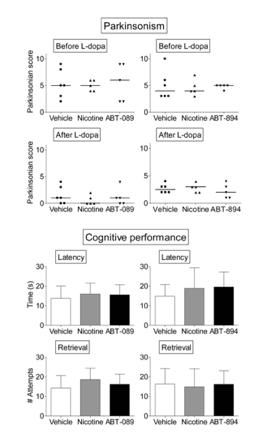
Figure 1: Changes in parkinsonisms and cognitive performance in animal subjects receiving a vehicle compound, nicotine, ABT-089, or ABT-894.
ABT-894 also showed prolonged benefits after treatment ended, requiring approximately six weeks of washout before dyskinesias returned to baseline levels. When ABT-894 was administered again following the washout period, its effectiveness remained similar, indicating that tolerance did not develop despite repeated exposure. Like ABT-089, ABT-894 did not worsen Parkinsonian symptoms, interfere with L-dopa’s motor benefits, or negatively affect cognitive performance. No signs of sedation, vomiting, or other adverse effects were observed.
Receptor binding studies provided additional insight into the mechanisms behind the drugs’ effects. Both ABT-089 and ABT-894 interacted with α4β2 and α6β2 nicotinic acetylcholine receptor subtypes, which are believed to play important roles in regulating dyskinesias. However, ABT-894 showed much greater potency, binding approximately 30–60 times more strongly than ABT-089. This increased receptor activity likely explained why ABT-894 produced larger reductions in dyskinesias at much lower doses. Overall, the findings showed that selective β2 nicotinic receptor agonists, particularly ABT-894, may represent promising therapeutic candidates for reducing L-dopa-induced dyskinesias in Parkinson’s disease while avoiding many of the side effects associated with other treatments [1].
2) The results of the study by Rueter et al demonstrated that ABT-089 possessed a unique pharmacological profile as a neuronal nicotinic receptor modulator capable of enhancing cognition and providing neuroprotection while producing fewer unwanted effects than nicotine. Receptor-binding experiments showed that ABT-089 interacted selectively with nicotinic receptors associated with cognitive processes, particularly the α4β2 subtype. The compound demonstrated high affinity for cytisine binding sites on α4β2 receptors while showing minimal activity at α7 and peripheral muscle-type nicotinic receptor binding sites. When evaluated against numerous additional receptors, enzymes, and transporter systems, ABT-089 displayed little interaction, indicating strong selectivity. These findings suggested that the compound could target beneficial central nervous system pathways while limiting unwanted activation of unrelated biological systems [2].
Functional testing revealed that ABT-089 displayed a complex activity pattern that differed from nicotine. Rather than functioning as a simple receptor activator, ABT-089 acted as an agonist, partial agonist, or antagonist depending on the receptor subtype and experimental model. At central α4β2-related receptors, ABT-089 demonstrated partial agonist effects, activating receptors but producing a more controlled response compared with nicotine. At receptors involved in peripheral autonomic activity, ABT-089 showed weak activity, which was considered beneficial because excessive stimulation of these receptors contributes to nicotine-related cardiovascular and gastrointestinal effects. Electrophysiological experiments showed that ABT-089 produced only weak activation of α7 receptor currents but could produce prolonged low-level receptor activity and influence receptor desensitization. These findings suggested that ABT-089’s therapeutic effects may involve subtle modulation rather than strong receptor stimulation.
Neurotransmitter experiments showed that ABT-089 effectively influenced brain signaling systems important for cognition. The compound stimulated acetylcholine release from rat hippocampal synaptosomes with potency and effectiveness similar to nicotine. Because acetylcholine is essential for attention, learning, and memory processes, this effect was considered an important mechanism underlying the cognitive-enhancing properties of the compound. ABT-089 also increased dopamine release from rat striatal preparations, although it was less potent than nicotine and acted as a partial agonist. The researchers suggested that these effects on acetylcholine and dopamine signaling likely contributed to improvements observed in animal models of cognition [2].
The neuroprotection studies showed that ABT-089 reduced neuronal injury caused by multiple toxic challenges. Pretreatment with ABT-089 protected cortical neurons and IMR-32 cells from glutamate-induced excitotoxicity, a mechanism associated with several neurological disorders. Protective effects were dependent on nicotinic receptor activity because receptor antagonists reduced the benefits. Chronic exposure produced even greater neuroprotection, with lower concentrations becoming effective after repeated treatment. ABT-089 also demonstrated protective effects against toxicity related to amyloid proteins associated with Alzheimer’s disease. These findings suggested that the compound may not only improve cognitive function but could potentially protect vulnerable neurons from damage.
Behavioral testing confirmed that ABT-089 improved cognitive performance across several animal models. In mice, the compound enhanced inhibitory avoidance learning, showing effectiveness similar to nicotine. In aged rats and animals with experimentally induced cognitive impairment, chronic ABT-089 treatment improved performance in memory-based tasks such as the Morris water maze. The compound also reversed deficits caused by scopolamine, a drug that disrupts cholinergic signaling and produces memory impairment. In monkeys, ABT-089 improved performance during delayed-match-to-sample testing, particularly when memory demands were increased. Improvements were observed in both mature and aged monkeys, supporting its potential usefulness for age-related cognitive decline [2].
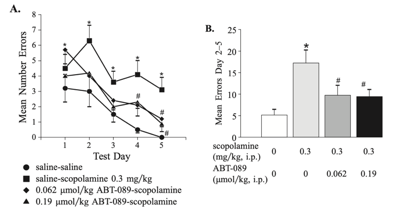
Figure 2: Effect of ABT-089 on mean number of errors performed during the Morris water maze test.
Despite producing cognitive benefits similar to nicotine, ABT-089 caused substantially fewer side effects. Unlike nicotine, ABT-089 did not significantly reduce locomotor activity, impair motor coordination, cause hypothermia, or produce seizures except at extremely high doses. Pharmacokinetic studies showed that ABT-089 was orally active, entered the brain effectively, and achieved concentrations associated with cognitive improvement. The compound showed reasonable oral bioavailability across species and accumulated preferentially in brain tissue compared with plasma.
Cardiovascular and gastrointestinal testing further supported the improved safety profile of ABT-089. The compound did not significantly alter cardiac electrical activity, hERG channel function, blood pressure, heart rate, cardiac output, or other cardiovascular measurements, even at concentrations far above those needed for cognitive effects. Gastrointestinal testing showed that ABT-089 did not produce strong intestinal stimulation, disrupt gastrointestinal movement, or cause vomiting in tested animal models. Overall, the results indicated that ABT-089 successfully maintained many of nicotine’s positive cognitive and neuroprotective effects while avoiding major nicotine-associated adverse effects. The authors concluded that ABT-089 represented a promising therapeutic candidate for disorders involving impaired cognition, including ADHD and Alzheimer’s disease [2].
Disclaimer
**LAB USE ONLY**
*This information is for educational purposes only and does not constitute medical advice. THE PRODUCTS DESCRIBED HEREIN ARE FOR RESEARCH USE ONLY. All clinical research must be conducted with oversight from the appropriate Institutional Review Board (IRB). All preclinical research must be conducted with oversight from the appropriate Institutional Animal Care and Use Committee (IACUC) following the guidelines of the Animal Welfare Act (AWA).
Citations
[1] Zhang D, Bordia T, McGregor M, McIntosh JM, Decker MW, Quik M. ABT-089 and ABT-894 reduce levodopa-induced dyskinesias in a monkey model of Parkinson’s disease. Mov Disord. 2014;29(4):508-517. doi:10.1002/mds.25817
[2] Rueter LE, Anderson DJ, Briggs CA, et al. ABT-089: pharmacological properties of a neuronal nicotinic acetylcholine receptor agonist for the potential treatment of cognitive disorders. CNS Drug Rev. 2004;10(2):167-182. doi:10.1111/j.1527-3458.2004.tb00011.x
ABT-089 HCl is sold for laboratory research use only. Terms of sale apply. Not for human consumption, nor medical, veterinary, or household uses. Please familiarize yourself with our Terms & Conditions prior to ordering.
| File Name | View/Download |
| Coming Soon! |  |
VIEW CERTIFICATES OF ANALYSIS (COA)

Reviews
There are no reviews yet.