


Description
Methylene Blue Liquid Spray







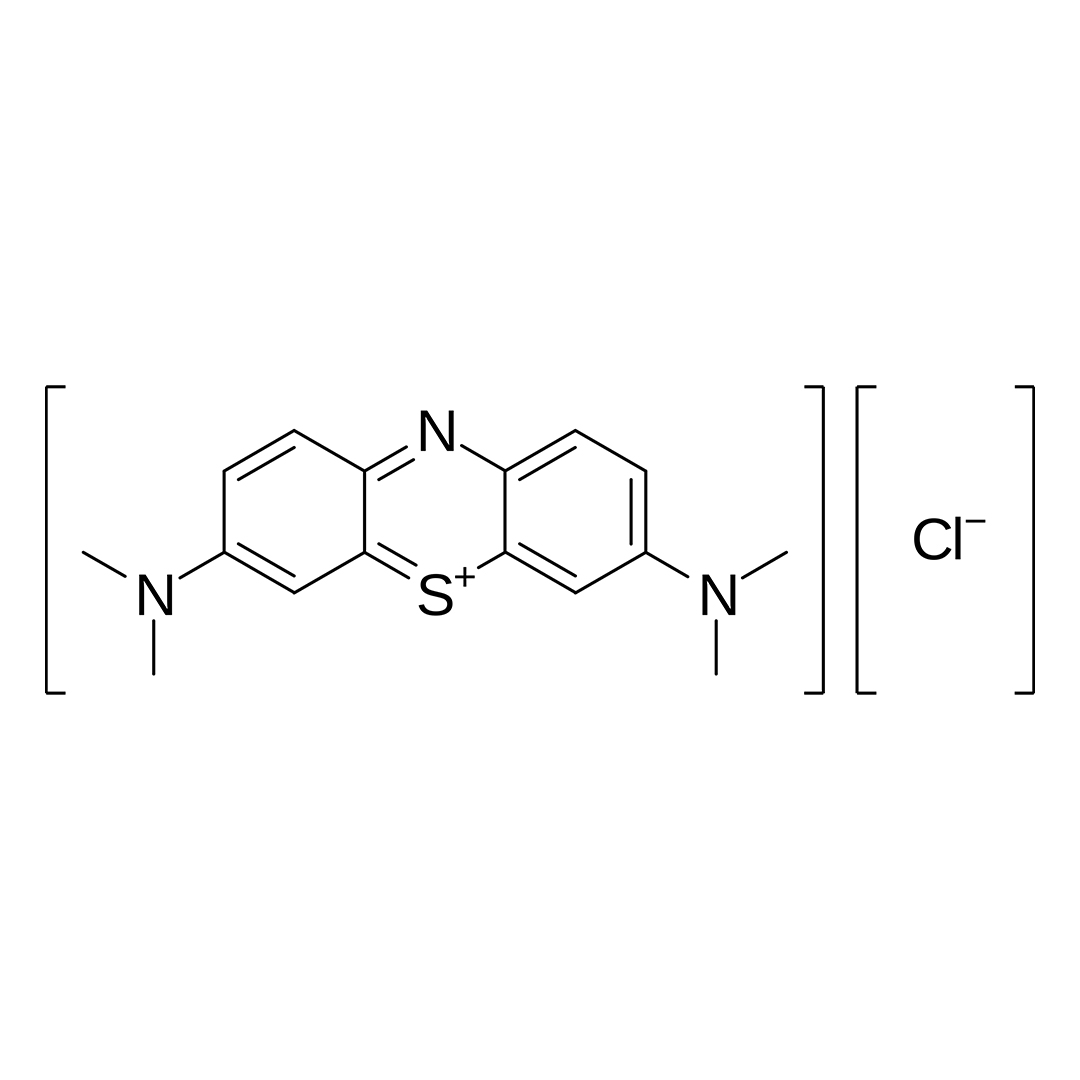
| CAS Number | 61-73-4 |
| Other Names | Methylthioninium chloride, Basic blue 9, Solvent blue 8 |
| IUPAC Name |
3,7-bis(Dimethylamino)-phenothiazin-5-ium chloride
|
| Molecular Formula | C₁₆H₁₈ClN₃S |
| Molecular Weight | 319.85 |
| Purity | ≥99% Pure (LC-MS) |
| Liquid Availability |  30mL liquid (0.25mg/mL, 7.5mg bottle)
|
| Powder Availability | 60 capsules (10mg/capsule, 600mg total bottle)
|
| Gel Availability | N/A |
| Storage | Store in cool dry environment, away from direct sunlight. |
| Terms | All products are for laboratory developmental research USE ONLY. Products are not for human consumption. |
What is Methylene Blue?
Methylene blue is a synthetic compound with a long history of use in both medical and scientific fields. Initially introduced as a dye, it has since gained attention for its potential nootropic properties, which refer to its ability to enhance cognitive functions such as memory, learning, and mental clarity. Recent research has explored its neuroprotective effects, suggesting that methylene blue may improve mitochondrial function, reduce oxidative stress, and even stimulate brain plasticity. These properties have led to increasing interest in its potential as a cognitive enhancer, particularly in the context of neurodegenerative diseases, memory impairments, and age-related cognitive decline. While methylene blue has been used therapeutically in treating conditions like methemoglobinemia and malaria, further research should be conducted regarding its potential role in cognitive enhancement.
Main Research Findings
1) Administration of methylene blue improves hemodynamic stabilization in cases of obstructive jaundice.
2) When administered within 24 hours of onset of septic shock, methylene blue resulted in a reduction in time to vasopressor discontinuation and a reduced length of hospitalization.
Selected Data
1) The research team of Huang et al examine the effects of methylene blue on obstructive jaundice conditions. Obstructive jaundice occurs when the common bile duct is partially or completely blocked, causing bile to leak from the digestive system into the bloodstream, which leads to damage in multiple vital organs. Surgical intervention is critical for relieving this condition; however, such procedures are associated with high rates of postoperative morbidity and mortality. Improved preoperative preparation and perioperative management have been shown to potentially enhance outcomes, but current practices are not yet fully optimized. Patients with obstructive jaundice are particularly vulnerable to severe hypotension after anesthesia induction, often requiring substantial fluid loading and high doses of vasopressors to maintain stable blood pressure [1].
Methylene blue, known as a potent inhibitor of nitric oxide synthase, has been successfully used to counteract refractory hypotension during cardiopulmonary bypass, septic shock, liver transplantation, and anaphylactic shock. While methylene blue is generally considered a second-line therapy for refractory hypotension, evidence suggests that early administration improves hemodynamic outcomes more effectively than delayed use. To examine whether methylene blue has the potential to treat jaundice conditions, researchers enrolled patients scheduled for surgery to relieve obstructive jaundice to evaluate the effects of prophylactic methylene blue administration on hemodynamic stability and organ function [1].
The study included patients aged 18 to 70 years who exhibited obstructive jaundice, defined by a total bilirubin level greater than 5.0 mg/ml and visible yellowing of the skin or sclera. Exclusion criteria included American Society of Anesthesiologists physical status scores of IV or V, ongoing selective serotonin reuptake inhibitor therapy, a history of abdominal surgery, coronary artery disease, hypertension requiring medication, other cardiovascular conditions, or significant respiratory dysfunction. Patients were randomized in a 1:1 ratio to receive either an intravenous infusion of 2 mg/kg methylene blue diluted in 50 ml saline or 50 ml of saline alone.
The methylene blue or placebo solution was administered by continuous intravenous infusion at a rate of 2.5 ml/min before anesthesia induction. Afterward, all patients were induced with 0.02 – 0.05 mg/kg of midazolam, 0.5 – 1 μg/kg of sufentanil, 0.2 – 0.3 mg/kg of etomidate, and 0.2 – 0.3 mg/kg of cisatracurium. Following tracheal intubation, patients were ventilated with a tidal volume of 8–10 ml/kg at 12–16 breaths per minute, maintaining an inspiration-to-expiration ratio of 1:2 and an end-tidal CO₂ level between 35 and 40 cm H₂O. Anesthesia depth was maintained using 1-2% sevoflurane and a continuous intravenous infusion of 2-4 ng/ml of remifentanil, while ensuring a Bispectral Index score between 40 and 60 throughout surgery. Additional boluses of cisatracurium were given as needed based on train-of-four nerve stimulation monitoring [1].
All patients had central venous and Swan-Ganz catheters placed via the right jugular vein, as well as arterial catheters inserted at the left radial artery site to continuously monitor invasive arterial blood pressure and central venous pressure. Blood gas analyses were conducted at multiple time points including: before and after anesthesia induction, after tumor removal, during entero-anastomosis or choledochojejunostomy, before abdominal closure, and 24 hours postoperatively. Management of hemodynamics and blood transfusion was standardized according to a detailed infusion regimen. Other aspects of intraoperative and postoperative care, such as fluid administration, antibiotics, and pain management, were determined by attending surgeons according to routine clinical practice.
The primary outcome measure monitored was the frequency of norepinephrine administration during the intraoperative period. Secondary outcomes included the total dose of norepinephrine, use of other vasoactive agents, volume of fluid administered, liver and renal function parameters, duration of stay in the intensive care unit, and overall hospital stay [1].
2) The research team of Ibarra-Estrada et al conducted a parallel, double-blinded, randomized controlled trial conducted in the medical-surgical intensive care unit (ICU) of an academic reference center. Patients eligible for the study were those aged 18 years or older, diagnosed with septic shock as defined by Sepsis-3 criteria. These criteria included a highly suspected or confirmed infection, the requirement of norepinephrine to maintain a mean arterial pressure of 65 mmHg or higher, and a serum lactate level greater than 2 mmol/L despite adequate fluid resuscitation [2].
Patients were excluded if they had been receiving norepinephrine for more than 24 hours, were pregnant, had a high probability of death within 48 hours, or had a history of glucose-6-phosphate dehydrogenase deficiency. Additionally, patients with concurrent hemorrhagic, obstructive, or hypovolemic shock, those requiring damage control surgery, or those with allergies to methylene blue or related substances were excluded. The trial also excluded patients with COVID-19 during its early stages due to uncertainties regarding the pathophysiology of the disease and its potential interaction with methylene blue.
The randomization process involved assigning patients to either the methylene blue group or the control group in a 1:1 ratio using a computer-generated randomization sequence. The randomization was performed by critical care physicians, and both patients and outcome assessors were blinded to the treatment received. Patients in the MB group received an intravenous infusion of 100 mg of methylene blue diluted in 500 ml of 0.9% sodium chloride, administered over six hours once daily for three doses. The control group received the same infusion, but without the inclusion of methylene blue. To ensure blinding, the infusion bags and lines were prepared by the central pharmacy and kept opaque [2].
The study site employed dynamic methods for fluid resuscitation in patients with septic shock, using techniques such as aortic velocity-time integral change after passive leg raising, arterial pulse pressure variation, tidal volume challenge, and respiratory variation of carotid peak flow velocity to predict volume responsiveness. Adequate fluid resuscitation was defined as the administration of at least 500 ml of balanced crystalloid followed by negative volume responsiveness as confirmed by at least two methods. Adjunctive vasopressin was administered at a dose of 0.03 IU/min if the norepinephrine dose reached 0.25 mcg/kg/min. Hydrocortisone, at 200 mg/day, was continuously infused as a standard protocol until 6 hours after all vasopressors were discontinued [2].
Demographic, ventilatory, and laboratory data were collected at the time of randomization, including the diagnosis of acute respiratory distress syndrome. The norepinephrine dose was recorded at multiple intervals: randomization, immediately after each intervention dose, and at 24 and 48 hours post-treatment. A comprehensive multiorgan point-of-care ultrasound was performed to assess organ function, including the calculation of ejection fraction. Additionally, methemoglobin saturation was continuously monitored using pulse co-oximetry throughout the intervention.
The primary outcome of the study was time to vasopressor discontinuation, defined as the cessation of all vasopressors for at least 48 consecutive hours. Secondary outcomes included vasopressor-free days at 28 days, all-cause mortality at 28 days, changes in serum lactate levels, days on mechanical ventilation, length of ICU and hospital stay, and changes in serum creatinine, bilirubin, aspartate/alanine aminotransferase levels, PaO2/FIO2 ratio, and ejection fraction after the intervention [2].
In summary, this trial is designed to evaluate the potential benefits of methylene blue in patients with septic shock, specifically its effects on vasopressor requirements, organ function, and overall recovery. The randomized controlled design, rigorous inclusion and exclusion criteria, and comprehensive outcome measures indicate that the results will contribute valuable insights into the use of methylene blue as a treatment option in critically ill patients [2].
Discussion
1) Between January 15, 2017, and June 17, 2018, the research team of Huang et al screened a total of 229 patients for participation in the study investigating methylene blue’s effects during surgery for obstructive jaundice. Of these, 70 patients met the inclusion criteria and were randomly assigned to receive either methylene blue or a saline solution. Blinding of the study participants and investigators was successfully maintained throughout the study. All randomized patients completed the study and were included in the final data analysis. Baseline characteristics between the methylene blue and control groups were well matched, ensuring comparability [1].
The administration of noradrenaline to maintain mean blood pressure above 65 mmHg or greater than 80% of baseline, as well as systemic vascular resistance over 800 dyne/s/cm⁵, was significantly less frequent in the methylene blue group than in the control group. Specifically, 13 out of 35 patients in the methylene blue group required noradrenaline compared to 23 out of 35 in the control group, a difference that was statistically significant. Moreover, the time-averaged dose of noradrenaline administered during the operation was lower in the methylene blue group compared to the control group.
Fewer patients in the methylene blue group required a large total dose of noradrenaline that was defined as more than 2 mg during surgery, with only 1 patient in the methylene blue group versus 9 in the control group. The duration of noradrenaline use was also shorter in the methylene blue group compared to the control group, with median durations of 0 minutes versus 110 minutes, respectively. However, the frequency and dosage of dobutamine use during surgery did not differ significantly between the two groups [1].
At baseline, systolic blood pressure, mean arterial pressure, systemic vascular resistance, and cardiac output were similar between the two groups. Following anesthesia induction, reductions in systolic blood pressure, mean arterial pressure, and systemic vascular resistance were observed in both groups. However, the methylene blue group maintained higher systolic blood pressure and mean arterial pressure values compared to the control group throughout the surgical procedure. Systemic vascular resistance was also significantly higher in the methylene blue group compared to the control group up to 180 minutes after anesthesia induction. Interestingly, cardiac output was higher in the control group 15 minutes after anesthesia induction, and although it remained numerically higher at other time points, these differences were deemed not statistically significant [1].
Plasma transfusion requirements were also lower in the methylene blue group compared to the control group. Specifically, 10 of 35 patients in the methylene blue group received plasma transfusions versus 19 of 35 in the control group. The overall frequency of plasma infusions was also reduced in the methylene blue group by 29% compared to 43%. Despite these differences in plasma transfusion, there were no significant differences between groups in terms of blood loss, use of washed red blood cells, colloid and crystalloid solutions, or other blood products during surgery. Furthermore, the duration of anesthesia and surgery was shorter in the methylene blue group, with anesthesia averaging 7.56 ± 2.13 hours versus 8.79 ± 2.47 hours in the control group and surgical procedures lasting 6.44 ± 2.01 hours versus 7.63 ± 2.31 hours, respectively.
Arterial blood gas analyses showed no significant differences between the two groups in key parameters, including pH, hemoglobin, partial pressures of oxygen and carbon dioxide, potassium, calcium, base excess, and lactic acid levels at all observed time points. In terms of organ function, significantly fewer patients developed acute kidney injury in the methylene blue group compared to the control group by 6% versus 23%, respectively. Additionally, fewer patients in the methylene blue group experienced elevated serum creatinine levels above the normal range on postoperative day 2 by 3% versus 17%, and day 3 by 0% versus 14%, respectively [1].
Regarding liver function, most patients in both groups displayed abnormal liver enzyme levels postoperatively. Elevated glutamic oxaloacetic transaminase levels were observed in 89% of methylene blue patients and 97% of control patients, while elevated glutamic pyruvic transaminase levels occurred in 94% and 97% of patients, respectively, without statistically significant differences. However, glutamic oxaloacetic transaminase levels were significantly lower in the methylene blue group compared to the control group on postoperative days 1, 2, and 3. On day 1, glutamic oxaloacetic transaminase was 255.2 ± 250.3 IU/L in the methylene blue group versus 559.0 ± 837.6 IU/L in the control group. Similar trends were observed on days 2 and 3 [1].
Glutamic pyruvic transaminase levels followed a similar pattern, with significantly lower values in the methylene blue group on days 1 and 2 and a non-significant trend toward lower values on day 3. Finally, creatine kinase activity, an indicator of muscle damage, was also lower in the methylene blue group after surgery. Creatine kinase levels on postoperative day 1 were 441.1 ± 282.3 IU/L in the methylene blue group versus 782.6 ± 480.4 IU/L in the control group, with significant differences persisting on days 2 [1].
2) Between March 16, 2017, and July 30, 2022, a total of 308 patients were screened for eligibility in a randomized controlled trial evaluating the effects of methylene blue in septic shock. Out of these, 92 patients met inclusion criteria and were randomized into two groups: 45 patients were assigned to the MB group, and 46 to the control group. One patient in the methylene blue group withdrew consent after receiving the first dose and was not included in the final analysis. As a result, 91 patients were included in the analysis, with all but one receiving the complete three-dose regimen of the assigned treatment. Every participant in the trial also received hydrocortisone as part of the standard care protocol [2].
The median age of the participants was 46 years, with an interquartile range of 35 to 55 years. Sixty percent of the study population were men. Acute kidney injury was present in 46% of the patients. The most frequently identified sources of sepsis were pulmonary infections, accounting for 49.5% of the cases, followed by intra-abdominal infections, which made up 38.5%. All patients received appropriate antimicrobial therapy within three hours of septic shock diagnosis. Most participants required mechanical ventilation and began their assigned intervention after the initial six hours following shock identification.
Baseline characteristics, including demographics, clinical status, and interventions received, were comparable between the two groups, ensuring an even distribution of confounding variables. The median daily dose of methylene blue in the intervention group was 1.2 mg/kg. Notably, no additional vasopressors such as phenylephrine, angiotensin II, epinephrine, or midodrine or additional inotropes like milrinone or dobutamine were administered during the study [2].
The primary outcome measured was the time to vasopressor discontinuation, which significantly favored the methylene blue group. The median time to discontinue all vasopressors in the MB group was 69 hours, compared to 94 hours in the control group. This represented a statistically significant median difference of 29.4 hours. Furthermore, norepinephrine requirements decreased more markedly in the methylene blue group over the initial four-day treatment window. Although not statistically significant, 11% fewer patients in the methylene blue group required re-initiation of norepinephrine within 48 hours of discontinuation compared to 28% of those in the control group, suggesting a trend toward better sustained shock reversal [2].
Several secondary outcomes also showed favorable results for the methylene blue group. Patients who received methylene blue experienced one additional vasopressor-free day at day 28. The cumulative fluid balance in the methylene blue group was lower by an average of 741 ml compared to the control group. Moreover, patients in the methylene blue group had a shorter length of stay in both the ICU and the hospital overall. The ICU stay was shorter by 1.5 days, and hospital stay was reduced by 2.7 days. A proportional hazards analysis demonstrated that patients in the methylene blue group had a 2.7 times higher hazard ratio for shock reversal within 28 days compared to controls, emphasizing the efficacy of methylene blue in promoting recovery from septic shock.
It is important to note that certain outcomes did not differ significantly between the two groups. Lactate levels over the first three days, the number of days on mechanical ventilation, and 28-day all-cause mortality rates were similar in both the methylene blue and control groups. These findings suggest that while methylene blue may expedite hemodynamic stabilization and hospital discharge, it may not significantly impact respiratory support duration or short-term survival [2].
Regarding safety and tolerability, the most commonly observed side effect in the methylene blue group was a characteristic green-blue discoloration of the urine, which occurred in 93% of the patients. Though harmless and expected, this effect is a known consequence of methylene blue administration. Additionally, methemoglobin saturation was significantly higher in the methylene blue group, with a median value of 2.9% compared to 0.5% in the control group. However, this elevation did not result in clinically significant methemoglobinemia in any patient. Importantly, no differences were found between the two groups regarding changes in cardiac ejection fraction, oxygenation as measured by the PaO2/FiO2 ratio, serum creatinine levels, bilirubin levels, or liver enzyme concentrations following the intervention. This suggests that methylene blue did not adversely affect renal, hepatic, or pulmonary function [2].
In conclusion, this randomized controlled trial demonstrated that methylene blue, when administered as an adjunctive therapy in septic shock, significantly shortened the duration of vasopressor use, improved fluid balance, and reduced ICU and hospital lengths of stay without causing serious adverse effects. While it did not significantly affect ventilator dependency or 28-day mortality, its overall benefit in promoting earlier hemodynamic stability and hospital discharge positions methylene blue as a potentially valuable therapeutic option in the management of septic shock [2].
Disclaimer
**LAB USE ONLY**
*This information is for educational purposes only and does not constitute medical advice. THE PRODUCTS DESCRIBED HEREIN ARE FOR RESEARCH USE ONLY. All clinical research must be conducted with oversight from the appropriate Institutional Review Board (IRB). All preclinical research must be conducted with oversight from the appropriate Institutional Animal Care and Use Committee (IACUC) following the guidelines of the Animal Welfare Act (AWA).
Citations
[1] Huang, J., Gao, X., Wang, M., Yang, Z., Xiang, L., Li, Y., Yi, B., Gu, J., Wen, J., Lu, K., Zhao, H., Ma, D., Chen, L., & Ning, J. (2023). Prophylactic Administration with Methylene Blue Improves Hemodynamic Stabilization During Obstructive Jaundice-Related Diseases’ Operation: a Blinded Randomized Controlled Trial. Journal of gastrointestinal surgery : official journal of the Society for Surgery of the Alimentary Tract, 27(9), 1837–1845.
[2] Ibarra-Estrada, M., Kattan, E., Aguilera-González, P., Sandoval-Plascencia, L., Rico-Jauregui, U., Gómez-Partida, C. A., Ortiz-Macías, I. X., López-Pulgarín, J. A., Chávez-Peña, Q., Mijangos-Méndez, J. C., Aguirre-Avalos, G., & Hernández, G. (2023). Early adjunctive methylene blue in patients with septic shock: a randomized controlled trial. Critical care (London, England), 27(1), 110. https://doi.org/10.1186/s13054-023-04397-7
Methylene Blue Liquid Spray is sold for laboratory research use only. Terms of sale apply. Not for human consumption, nor medical, veterinary, or household uses. Please familiarize yourself with our Terms & Conditions prior to ordering.


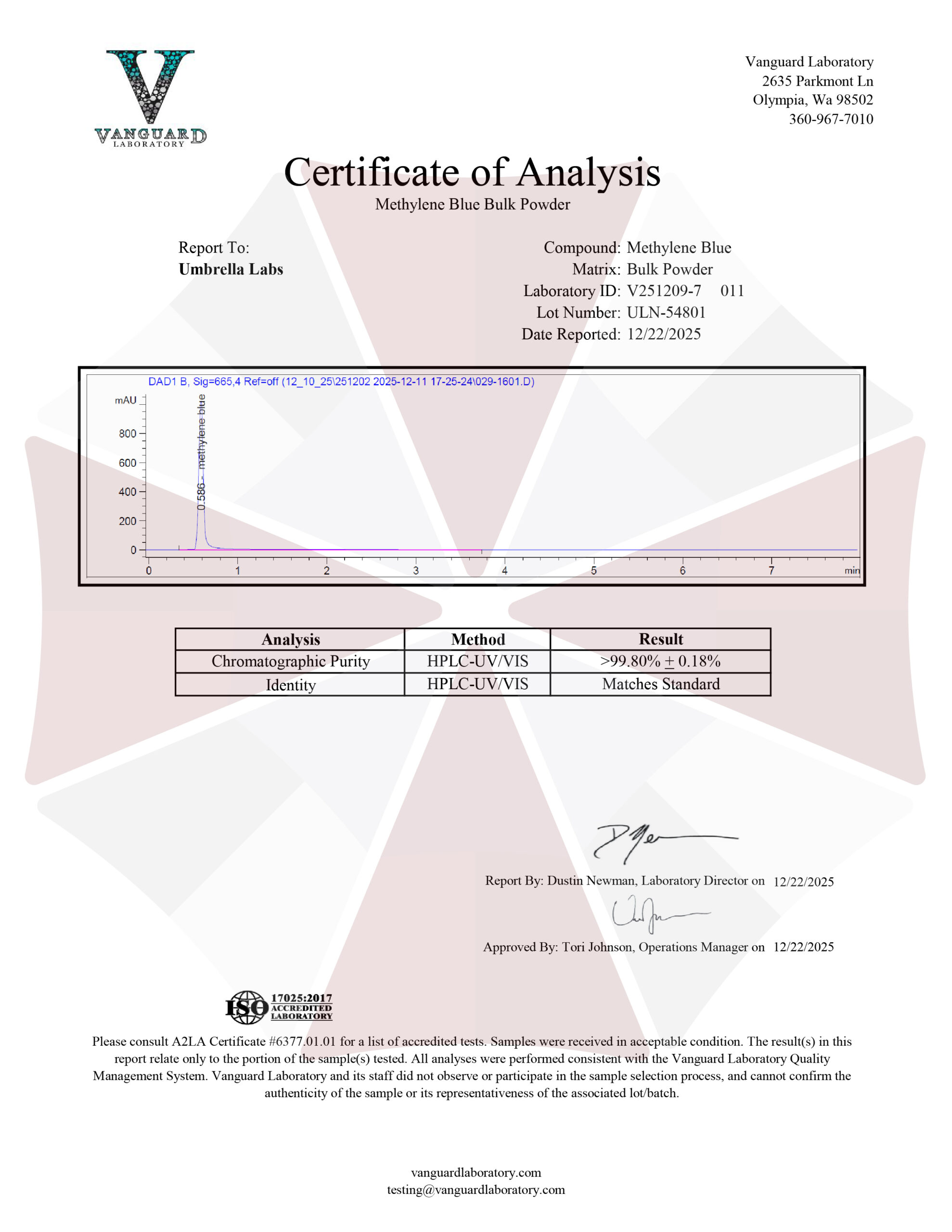
| File Name | View/Download |
| 2025-12-22-Umbrella-Labs-Methylene-Blue-Certificate-of-Analysis-COA.pdf |  |
VIEW CERTIFICATES OF ANALYSIS (COA)


Reviews
There are no reviews yet.