

Description
Memantine HCl Nootropic Powder






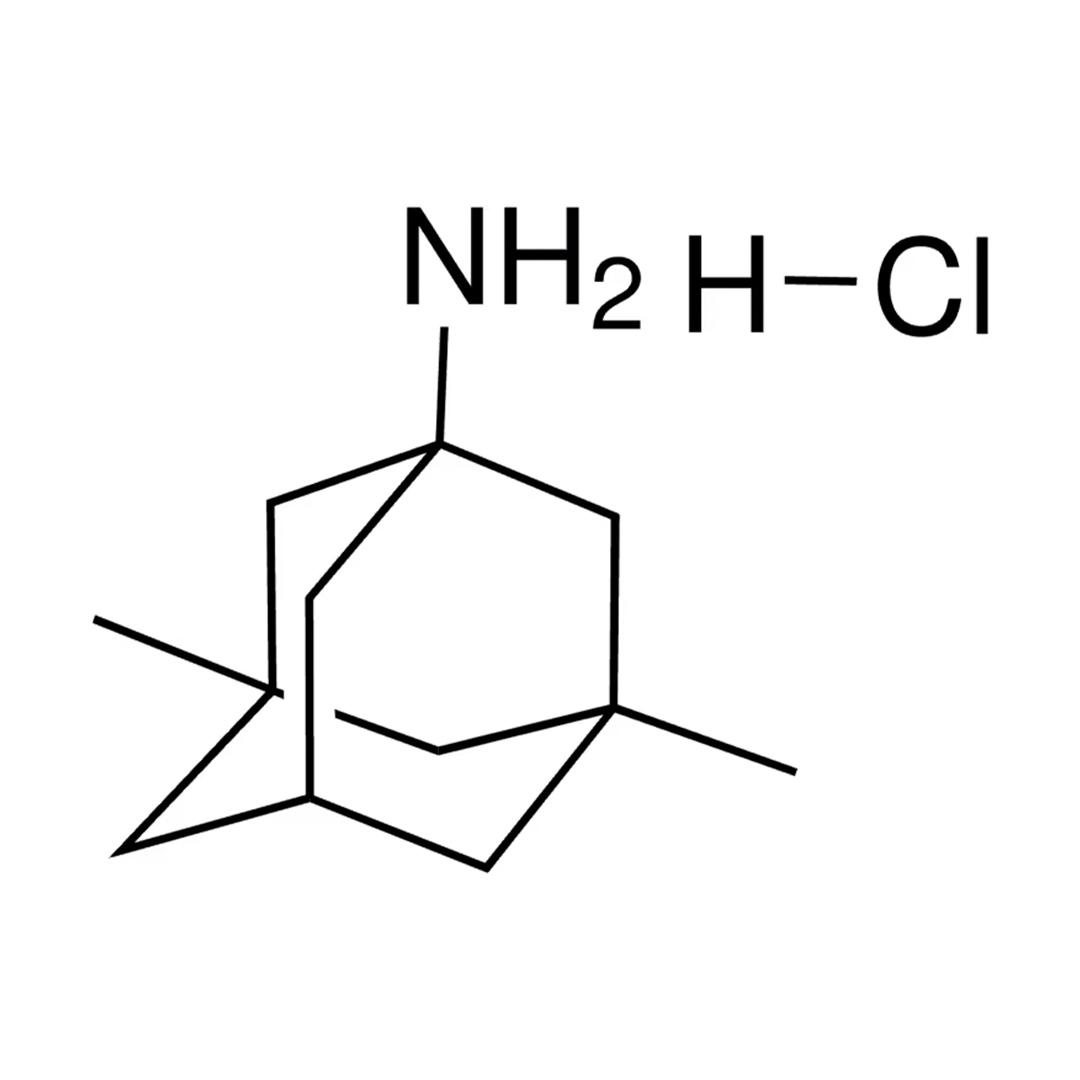
| CAS Number | 41100-52-1 |
| Other Names | 3,5-Dimethyl-1-adamantanamine hydrochloride, 3,5-Dimethylamantadine hydrochloride, 3,5-Dimethyltricyclo[3.3.1.13,7]decan-1-amine hydrochloride, Memantine hydrochloride |
| IUPAC Name |
Hydrogen 3,5-dimethyladamantan-1-amine chloride
|
| Molecular Formula | C₁₂H₂₁N•HCl |
| Molecular Weight | 215.76 |
| Purity | ≥99% Pure (LC-MS) |
| Liquid Availability |  30mL bottle (10mg/mL, 300mg total) |
| Powder Availability | 10 grams
|
| Gel Availability | N/A |
| Storage | Store in cool dry environment, away from direct sunlight. |
| Terms | All products are for laboratory developmental research USE ONLY. Products are not for human consumption. |
What is Memantine?
Memantine is a nootropic agent with neuroprotective qualities that has been primarily used in the treatment of moderate to severe Alzheimer’s disease. As an uncompetitive antagonist of the N-methyl-D-aspartate (NMDA) receptor, memantine works by regulating glutamatergic activity in the brain, which is often disrupted in neurodegenerative disorders. By blocking excessive activation of NMDA receptors, memantine helps to reduce excitotoxicity. This mechanism of action makes memantine distinct from other Alzheimer’s medications, such as acetylcholinesterase inhibitors, and has also prompted interest in its other potential uses, including applications in Parkinson’s disease, multiple sclerosis, depression, and other cognitive disorders. Memantine’s ability to preserve and potentially enhance cognitive function has made it a subject of increasing interest in neuroscience and psychopharmacology.
Main Research Findings
1) Memantine has the potential to enhance auditory function, indicating that the compound may act as an additional treatment in schizophrenia, as well as facilitate learning and promote gains from auditory-based targeted cognitive training.
2) Treatment with memantine was found to reduce clinical deterioration in moderate-to-severe cases of Alzheimer’s disease.
Selected Data
1) This study, conducted by researchers Swerdlow et al, investigated the effects of the NMDA receptor antagonist, memantine, on auditory processing and learning in individuals with schizophrenia or schizoaffective disorder, as well as healthy subjects. Participants with schizophrenia were required to be on a stable regimen of antipsychotic medication for at least 30 days and diagnosed with either schizophrenia or depressed-type schizoaffective disorder. Both patients and healthy subjects were screened through phone or field interviews, including assessments for medical, psychiatric, and substance use history [1].
Participants who passed the initial screening completed an in-person evaluation, which included a confirmatory diagnostic interview, physical examination, electrocardiogram, vision and hearing tests; with exclusion for hearing detection thresholds over 40 dB at 1000 Hz, urine toxicology screening for drug use, and pregnancy testing. Those who qualified completed symptom assessments and baseline evaluations of reading ability through the Wide Range Achievement Test–Reading and neurocognitive function using the MATRICS Consensus Cognitive Battery (MCCB).
Participants were randomly assigned to one of two dosing sequences: receiving placebo first followed by memantine, or vice versa. Testing was conducted on two separate days, 7–10 days apart. On each test day, participants ingested a single 20 mg dose of memantine or a placebo. Approximately 4.5 to 7 hours after ingestion, participants were tested on a range of auditory processing measures designed to assess auditory discrimination, temporal resolution, and auditory learning [1].
Three primary tests were used to evaluate auditory fidelity: the Words-in-Noise (WIN) test, the Quick Speech-in-Noise (QuickSIN) test, and the Gaps-in-Noise (GIN) test. WIN and QuickSIN assess how well participants can understand speech over background noise, simulating real-world auditory challenges. WIN uses single-word stimuli, while QuickSIN uses full sentences, both embedded in four-talker babble noise at varying decibel levels. Participants repeated what they heard, and performance was measured as the number of correct repetitions. The maximum score was five correct per noise level, with expected ceiling effects in normal-hearing individuals at low noise levels and floor effects at high noise levels [1].
The GIN test evaluates auditory temporal resolution, or the ability to detect brief silent intervals within a continuous noise stream. This test, which is sensitive to central auditory deficits in schizophrenia, requires participants to identify gaps ranging from 2 to 20 milliseconds, presented within 6-second white noise bursts. Each gap duration was repeated six times, for a total of 60 gaps. Performance was based on the number of correctly identified gaps and a calculated gap detection threshold.
Auditory learning was assessed using the “Sound Sweeps” task from the PositScience BrainHQ platform. This task requires participants to identify the direction of pitch change as ascending or descending in frequency-modulated sound pairs. The task is adaptive, becoming more challenging following correct responses and easier after incorrect ones. Performance was measured in terms of auditory processing speed, with lower times indicating better performance. Each test day included one hour of Sound Sweeps training, and the key outcome was the change in auditory processing speed from baseline to the best performance during that session [1].
Two subjects with schizophrenia had maximum latency scores of 1000 ms both before and after training, regardless of treatment condition, and analyses were performed with and without these cases to assess their impact. In addition to performance metrics, subjective symptoms such as happiness, drowsiness, queasiness, dizziness, attentional focus, and anxiety, were recorded using visual analog Symptom Rating Scales at eight points during each test day. Auditory training was administered 265 minutes post-dose, followed by auditory discrimination and temporal processing tests 430 minutes post-dose [1].
The study’s primary hypothesis was that memantine would improve auditory processing in schizophrenia patients. Since these auditory tasks are not commonly used to evaluate pharmacological effects and previous evidence from other auditory paradigms such as mismatch negativity, auditory steady-state response, and prepulse inhibition did not point to a specific auditory domain, the researchers had no prior expectation about which measure would be most sensitive. However, they anticipated that the largest effects would be observed when baseline performance left room for improvement, avoiding ceiling or floor effects [1].
Primary dependent variables including correct responses on WIN, QuickSIN, and GIN, as well as learning-induced APS changes, were analyzed using ANOVA. Diagnosis served as a between-subject factor, and treatment condition was a within-subject factor. Additional within-subject factors included dB salience for WIN and QuickSIN and gap duration for GIN. For WIN and QuickSIN, scores from 0 dB conditions were both included and excluded from the analyses to ensure robustness.
Given the restricted scoring range of these tasks, nonparametric analyses were also conducted to confirm significant findings from the ANOVAs and to examine correlations between measures. The researchers also investigated whether baseline levels of attention and vigilance, as measured by the MCCB, influenced performance outcomes. This was assessed through a median split analysis comparing participants with high vs. low baseline attention scores [1].
Finally, exploratory analyses examined the potential impact of additional factors such as age, baseline hearing thresholds, smoking status, medication, and drug administration order. These exploratory variables were considered based on prior research suggesting they may influence auditory processing performance or modulate responses to pharmacological intervention [1].
In conclusion, this controlled, crossover study used a battery of validated auditory tasks and neurocognitive measures to evaluate whether memantine could enhance auditory discrimination, temporal resolution, and learning in individuals with schizophrenia. The design allowed for the examination of within-subject treatment effects, and the inclusion of healthy controls enabled comparisons to normative performance levels [1].
2) This clinical trial conducted by the research team of Reisburg et al investigated the efficacy and safety of memantine, a nootropic compound, in treating community-dwelling patients with moderate-to-severe Alzheimer’s disease. Participants were aged 50 or older and met the criteria for probable Alzheimer’s disease as defined by both the DSM-IV and the National Institute of Neurologic and Communicative Disorders and Stroke–Alzheimer’s Disease and Related Disorders Association (NINCDS–ADRDA). To qualify, patients needed Mini–Mental State Examination scores between 3 and 14, indicating significant cognitive impairment, and were required to be in stages 5 or 6 on the Global Deterioration Scale. Additionally, participants had to be at stage 6a or higher on the Functional Assessment Staging Instrument, which signifies impairments in basic activities of daily living. Patients were also required to have a reliable caregiver and have undergone brain imaging within the past year [2].
Exclusion criteria included the presence of vascular dementia or any other neurological disease aside from Alzheimer’s, major depressive disorder, or a modified Hachinski Ischemic Rating Scale score greater than 4, which would indicate potential cerebrovascular disease. Patients were also excluded if they had any significant comorbid medical conditions or abnormal lab values. Furthermore, individuals taking certain medications including anticonvulsants, antiparkinsonian drugs, neuroleptics, cholinomimetic agents, or other investigational compounds were not eligible. However, patients on a stable dose of antidepressants for at least two months prior to the trial were allowed to participate. Use of chloral hydrate was permitted as a sedative, but not within 24 hours of any study assessment [2].
The study was designed as a 28-week, randomized, double-blind, placebo-controlled, parallel-group trial. Participants were randomly assigned to receive either 20 mg per day of memantine or an identical-appearing placebo. Randomization was stratified by site using a computerized system to maintain blinding. Treatment was discontinued if deemed medically necessary or if the patient chose to withdraw. If a patient withdrew early, they were encouraged to complete final evaluations and return for a “retrieved-dropout” visit at week 28. This visit included all the primary endpoint assessments to preserve data integrity. An optional 24-week open-label extension, in which all participants received memantine, was offered following the main study, although results from that phase were still under analysis.
Two co-primary efficacy endpoints were established. The first was the Clinician’s Interview-Based Impression of Change Plus Caregiver Input (CIBIC-Plus), a global assessment that captures overall patient status relative to baseline on a 7-point scale. It includes information from structured interviews with both the patient and the caregiver and evaluates cognition, function, and behavior. Clinicians conducting these interviews were blinded to treatment assignment and consistent across all time points for each patient whenever possible. The second primary endpoint was the Alzheimer’s Disease Cooperative Study–Activities of Daily Living Inventory, modified for severe dementia (ADCS-ADLsev). This 19-item caregiver-rated tool measures a patient’s ability to perform basic daily tasks, with total scores ranging from 0 to 54, where higher scores indicate better functioning [2].
In addition to the primary endpoints, several secondary outcomes were assessed to provide a more comprehensive understanding of treatment effects. These included the Severe Impairment Battery (SIB), which evaluates cognitive domains in patients with severe dementia; the MMSE, which provides a general measure of cognitive function; the Global Deterioration Scale, which evaluates overall cognitive and functional decline; and the Functional Assessment Staging Instrument, which tracks the progressive loss of daily functional abilities. Neuropsychiatric symptoms were measured using the Neuropsychiatric Inventory, which also captures caregiver distress, and caregiver burden and resource use were assessed through the Resource Utilization in Dementia instrument. A predefined responder analysis classified patients as responders if they showed no decline or improvement on the CIBIC-Plus along with stability or improvement on either the ADCS-ADLsev or the SIB [2].
Safety monitoring was an integral part of the study. Patients underwent regular neurologic and physical examinations, as well as vital sign checks, electrocardiograms, and laboratory tests including blood chemistry, hematology, and urinalysis. Adverse events were carefully recorded throughout the study period.
Statistical analyses followed an intent-to-treat approach and included all randomized patients who had at least one post-baseline assessment. For participants who discontinued early, their last available data point was carried forward to the week 28 endpoint. Three additional sensitivity analyses were conducted to address missing data: one used retrieved-dropout values at week 28, another assumed no change for patients with no post-baseline data, and a third replaced missing values with the mean decline observed in the placebo group. An observed-cases analysis, which included only patients who completed the 28-week visit, was also performed. Efficacy results were analyzed using the Wilcoxon–Mann–Whitney test, a non-parametric method suitable for independent samples. All statistical tests were two-sided, and no interim analyses were conducted [2].
In summary, this clinical trial aimed to assess the efficacy and safety of memantine in individuals with moderate-to-severe Alzheimer’s disease living in the community. By employing stringent inclusion criteria, comprehensive outcome measures, and rigorous statistical methods, the study provided valuable insight into memantine’s potential as a therapeutic option for patients at this advanced stage of dementia [2].
Discussion
1) This study performed by the team of Swedlow et al investigated the effects of memantine, an NMDA receptor antagonist, on auditory processing in individuals with schizophrenia compared to healthy controls. The results provide a comprehensive look at how memantine influences different facets of auditory perception and learning, with particular attention to group differences, cognitive function, and potential confounding factors such as age, medication, and smoking status [1].
The study involved a chronically ill schizophrenia patient group that was moderately to severely impaired and on multiple medications. Compared to healthy subjects, these patients were older, heavier, less educated, more likely to be smokers, and had lower scores on the Wide Range Achievement Test (WRAT). Patients also had modestly elevated hearing thresholds for 1000 Hz and 6000 Hz tones, though not for 500 Hz. As expected, patients performed significantly worse on most domains of the MCCB, except for reasoning and problem solving [1].
Memantine, at a 20 mg dose, did not produce strong subjective effects, as evidenced by measures such as the Subjective Rating Scale and autonomic parameters such as heart rate and blood pressure. Notably, “Focus Attention” scores on the Subjective Rating Scale declined more in healthy subjects across the session, an effect counteracted by memantine. However, this interaction was not moderated by age, smoking status, or auditory/visual MCCB scores. Most participants could not reliably distinguish between memantine and placebo, indicating minimal perceptual or physiological impact [1].
The WIN task showed that both schizophrenia patients and healthy subjects experienced expected performance declines with increasing background noise. Although there were no significant main effects of diagnosis or drug overall, a significant interaction between drug and decibel level emerged. Specifically, memantine significantly improved performance at the 4 dB level among patients, but not in healthy subjects, including an age-matched subgroup. This improvement was confirmed with nonparametric tests. Notably, the benefit of memantine was most pronounced in patients with lower baseline MCCB auditory/visual scores, suggesting that cognitive ability moderated drug response. The performance enhancement in patients corresponded to a 1.74 dB gain in effective signal intensity, suggesting a “normalizing” effect [1].
QuickSIN results paralleled those of WIN in that performance declined with decreasing signal-to-noise ratios. However, unlike WIN, QuickSIN did not reveal a clear threshold of maximal performance loss. Both groups showed modest but statistically significant improvements with memantine, and this was consistent across all speech intensities. There was no interaction between drug and decibel level. Again, nonparametric tests supported these results. However, the cognitive modulation effect seen in WIN was absent and the benefit of memantine did not vary by MCCB auditory/visual scores.
GIN performance revealed a significant impairment in patients compared to healthy subjects, although this difference disappeared in age-matched subgroups, suggesting age as a confounding factor. Memantine did not significantly affect performance in either group. A performance drop was most evident at the 5 ms gap duration, especially in patients, but this was unrelated to memantine administration or cognitive ability.
Baseline performance on the Sound Sweeps task indicated that schizophrenia patients had slower auditory processing speeds than healthy subjects, with a large effect size. These differences persisted when groups were age-matched. While higher MCCB auditory/visual scores were associated with more learning, the differences were not statistically significant. On test days, patients again demonstrated slower auditory processing speed, with no main effect of memantine or significant learning across blocks [1].
However, a notable finding was a significant diagnosis and drug interaction for auditory processing speed. Memantine significantly enhanced learning in patients but not in healthy subjects, a pattern confirmed even when ceiling-level performers were excluded. This suggests that memantine’s effect on auditory learning may be specific to the schizophrenia group. Additionally, memantine-induced auditory processing speed improvements “carried forward” to subsequent testing sessions, implying that these effects were not merely state-dependent.
Performance on different auditory tasks did not correlate significantly within individuals, suggesting that sensitivity to memantine varies across auditory domains. However, patients classified as “high responders” to memantine on one task also tended to show improvements on other tasks, pointing to some consistency among sensitive individuals. Demographic and clinical variables such as age, hearing threshold, medication dose, and smoking status did not significantly correlate with memantine’s effect, although there were trends suggesting possible negative and positive influences from age and antipsychotic dosage, respectively [1].
This study demonstrates that memantine selectively enhances certain aspects of auditory processing in schizophrenia, particularly in speech-in-noise recognition and auditory learning. These effects are most evident among cognitively lower-functioning patients and appear independent of subjective drug effects, age, medication dose, or smoking. The specificity of memantine’s benefits across auditory tasks, as well as the absence of strong inter-measure correlations, suggests complex and domain-specific mechanisms of auditory dysfunction and pharmacological response in schizophrenia [1].
2) The clinical trial performed by the research team of Reisberg et al evaluated the efficacy and safety of memantine, a medication used to treat moderate-to-severe Alzheimer’s disease. The study enrolled 252 patients out of 345 screened individuals that were then randomly assigned in equal numbers to receive either memantine or a placebo. The trial was double-blind in design, meaning neither the patients nor the clinicians knew who received the active drug. Of the 252 enrolled participants, 126 were assigned to the memantine group and 126 to the placebo group. The baseline characteristics were well balanced across the two groups. Approximately two-thirds of the participants were female, and the average age was 76 years. The mean baseline score on the Mini–Mental State Examination, a commonly used test to assess cognitive function, was 7.9, indicating that the study population had moderate-to-severe cognitive impairment [2].
The efficacy of memantine was assessed using various tools, including the CIBIC-Plus, the ADCS-ADLsev, the SIB, the Functional Assessment Staging (FAST) scale, and the Resource Utilization in Dementia (RUD) score. Results showed a favorable trend for memantine in several efficacy measures. On the CIBIC-Plus scale, memantine demonstrated a modest benefit compared to placebo at week 28, with a mean difference of 0.3 points, indicating a statistically significant improvement from baseline. Similarly, patients in the memantine group experienced significantly less deterioration in daily functioning, as assessed by the ADCS-ADLsev. At both the study’s endpoint and week 28, the memantine group showed better outcomes with a mean difference of 2.1 points using the last observation carried forward analysis and a 3.4-point difference in the observed-cases analysis [2].
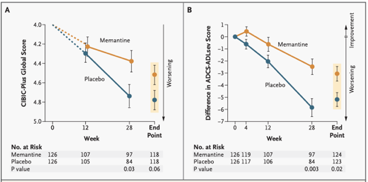
Figure 1: A) Changes in CBIC-Plus Global scores and B) differences in ADCS-ADLsec scores throughout the 28 week experimental period in the placebo-treated group and memantine-treated group
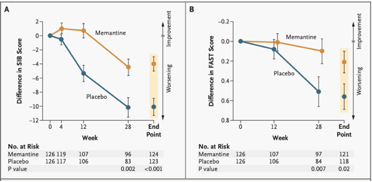
Figure 2: A) Differences SIB and B) FAST scores throughout the 28 week experimental period in the placebo-treated group and the memantine-treated group
In addition, performance on the SIB, which evaluates cognitive function in severely impaired individuals, significantly favored memantine. According to the study’s predetermined criteria for treatment response, 29% of patients in the memantine group were classified as responders, compared to only 10% in the placebo group.Memantine also slowed the progression of Alzheimer’s disease, as indicated by better scores on the FAST scale. However, there were no significant differences between groups in MMSE scores, Global Deterioration Scale stage, or the Neuropsychiatric Inventory, which evaluates behavioral symptoms [2].
Subgroup analysis revealed that memantine was beneficial across both moderate and severe Alzheimer’s disease categories, with improvements noted in all primary outcome measures regardless of initial cognitive severity. Furthermore, memantine significantly reduced the time burden placed on caregivers. Based on the RUD score, caregivers of memantine-treated patients spent approximately 45.8 fewer hours per month providing care.
In terms of safety and tolerability, adverse events were common in both groups with 84% incidence in the memantine group and 87% incidence in the placebo group; this is expected in a population with advanced disease. Most events were mild to moderate and not directly related to the study medication. The most frequently reported adverse events had similar incidence rates in both groups, differing by no more than 2%. No meaningful differences were observed between the two groups in terms of laboratory results, ECG findings, or vital signs, indicating that memantine does not cause significant physiological disturbances in this patient population [2].
In conclusion, the study demonstrated that memantine provides statistically and clinically meaningful benefit in patients with moderate-to-severe Alzheimer’s disease. It slows the progression of cognitive and functional decline, reduces caregiver burden, and has a favorable safety profile compared to placebo. These findings support the use of memantine as a therapeutic option for managing symptoms in this challenging stage of Alzheimer’s disease [2].
Disclaimer
**LAB USE ONLY**
*This information is for educational purposes only and does not constitute medical advice. THE PRODUCTS DESCRIBED HEREIN ARE FOR RESEARCH USE ONLY. All clinical research must be conducted with oversight from the appropriate Institutional Review Board (IRB). All preclinical research must be conducted with oversight from the appropriate Institutional Animal Care and Use Committee (IACUC) following the guidelines of the Animal Welfare Act (AWA).
Citations
[1] Swerdlow NR, Bhakta SG, Talledo J, et al. Memantine effects on auditory discrimination and training in schizophrenia patients. Neuropsychopharmacology. 2020;45(13):2180-2188. doi:10.1038/s41386-020-00865-8
[2] Reisberg B, Doody R, Stöffler A, et al. Memantine in moderate-to-severe Alzheimer’s disease. N Engl J Med. 2003;348(14):1333-1341. doi:10.1056/NEJMoa013128
Memantine HCl is sold for laboratory research use only. Terms of sale apply. Not for human consumption, nor medical, veterinary, or household uses. Please familiarize yourself with our Terms & Conditions prior to ordering.
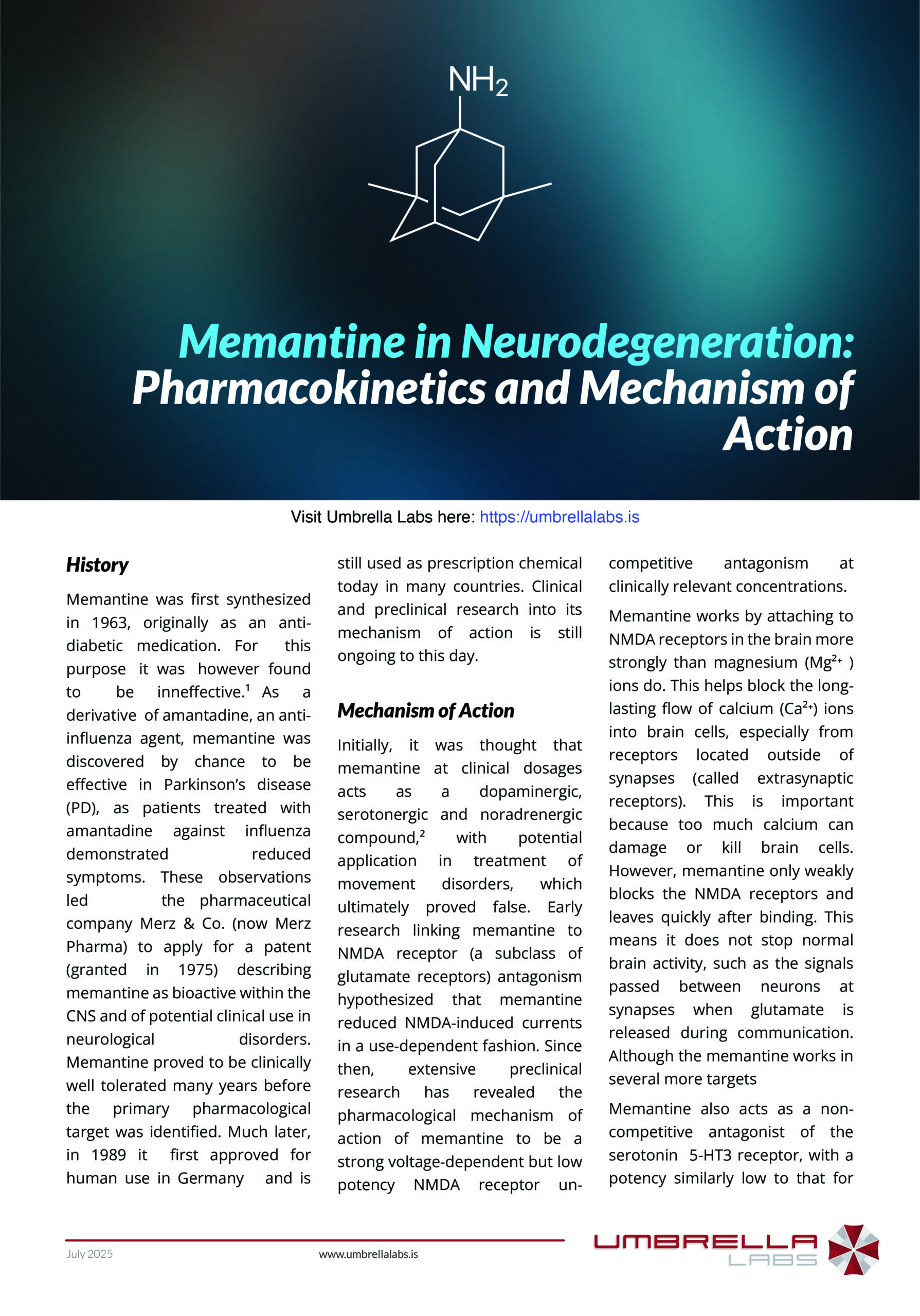
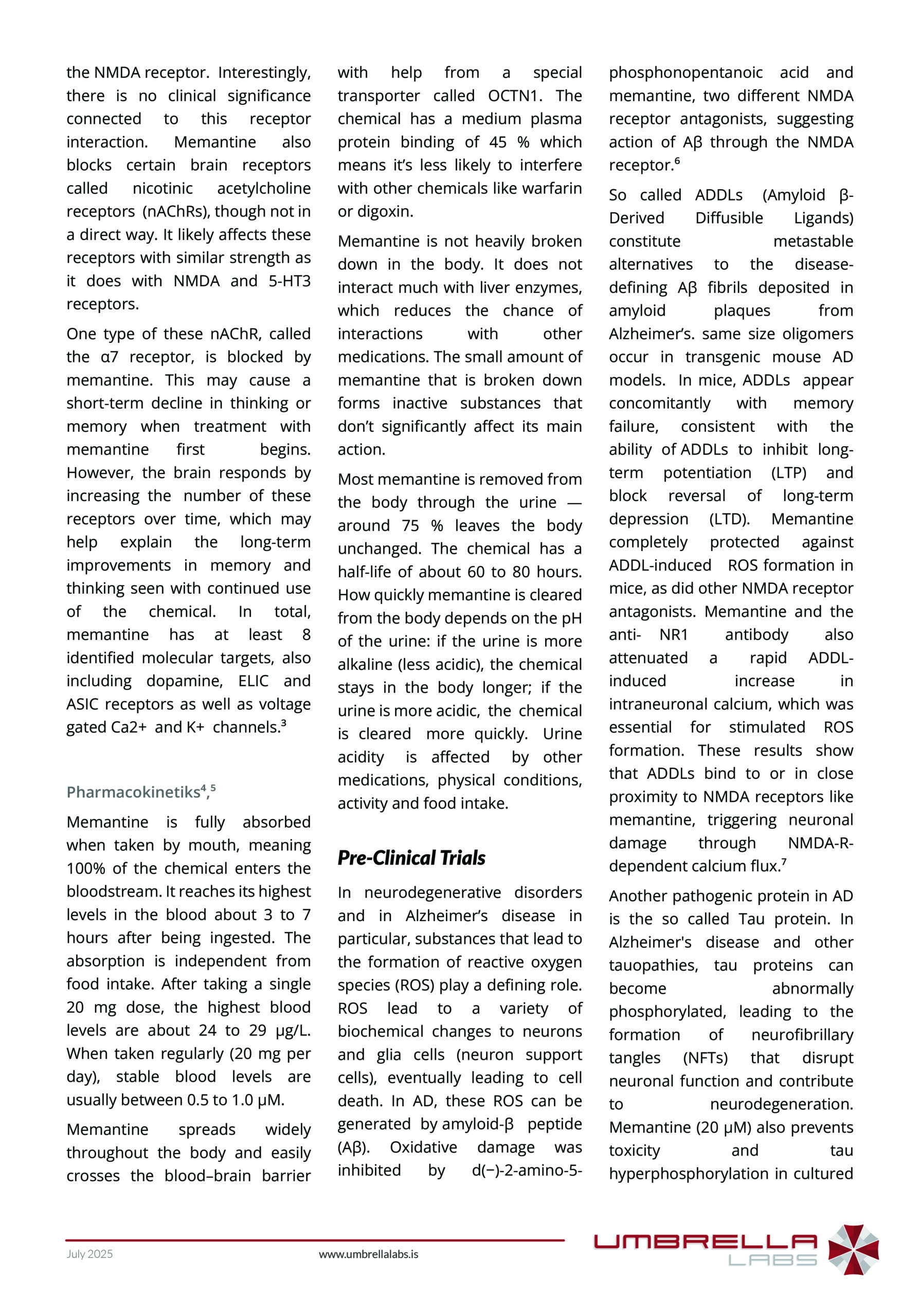
 Memantine in Neurodegeneration: Pharmacokinetics and Mechanism of Action


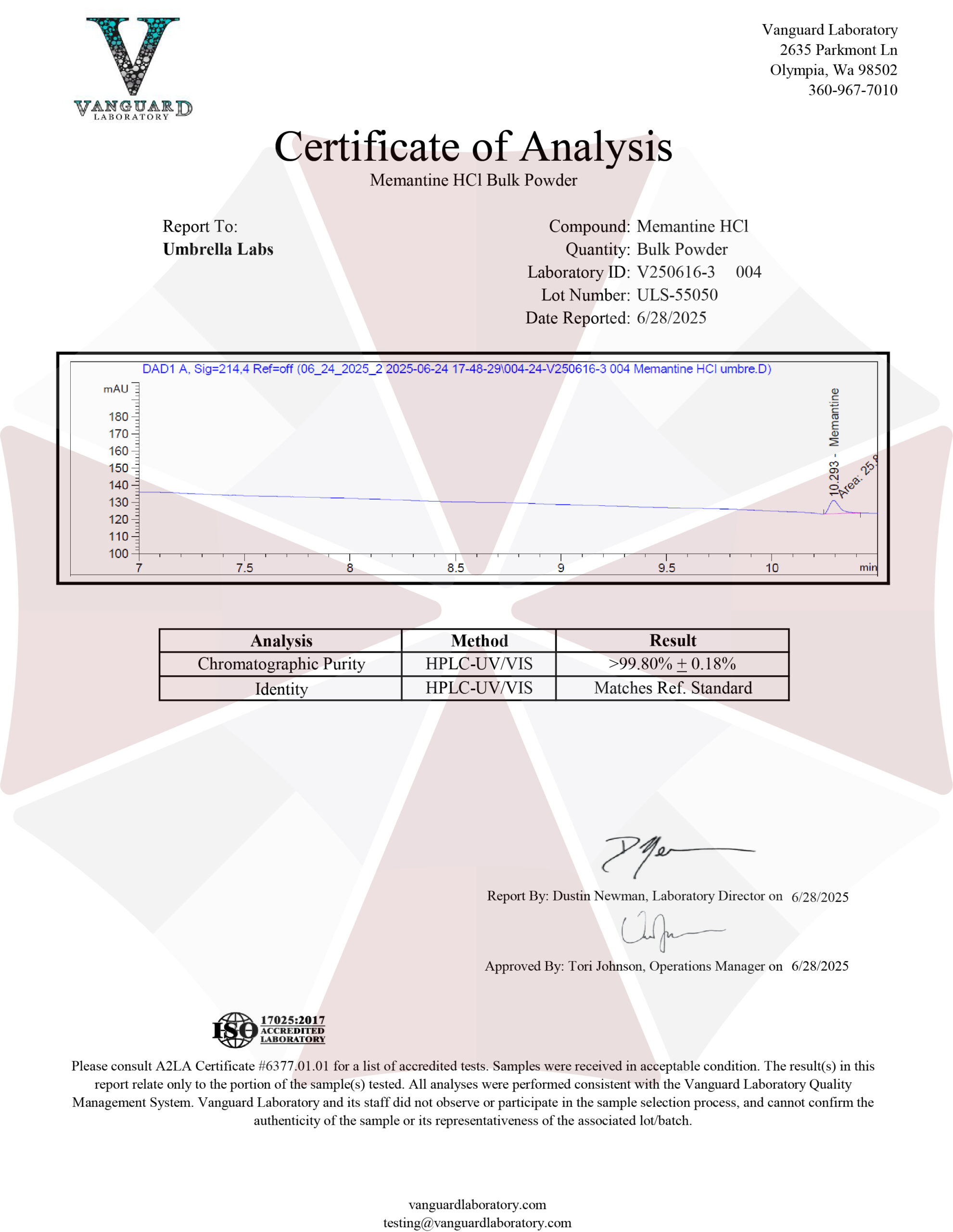
| File Name | View/Download |
| 2025-06-28-Umbrella-Labs-Memantine-HCl-Certificate-of-Analysis-COA.pdf | |
VIEW CERTIFICATES OF ANALYSIS (COA)
Reviews
There are no reviews yet.