Main Research Findings
1) The research team of Raychaudhuri et. al found that the peptide T analogue, DAPTA, may have anti-chemotaxic properties that explain the compound’s ability to treat psoriasis.
2) Treatment with peptide T was found to increase both the distribution and density of Langerhans’ cells in the epidermis to normal levels in individuals experiencing symptoms of psoriasis.
3) Research shows that peptide T has the potential to block the binding of gp120 to brain tissue, however, more conclusive data should be gathered in order to accurately determine the ability of the peptide to treat cognitive decline related to HIV.
Selected Data
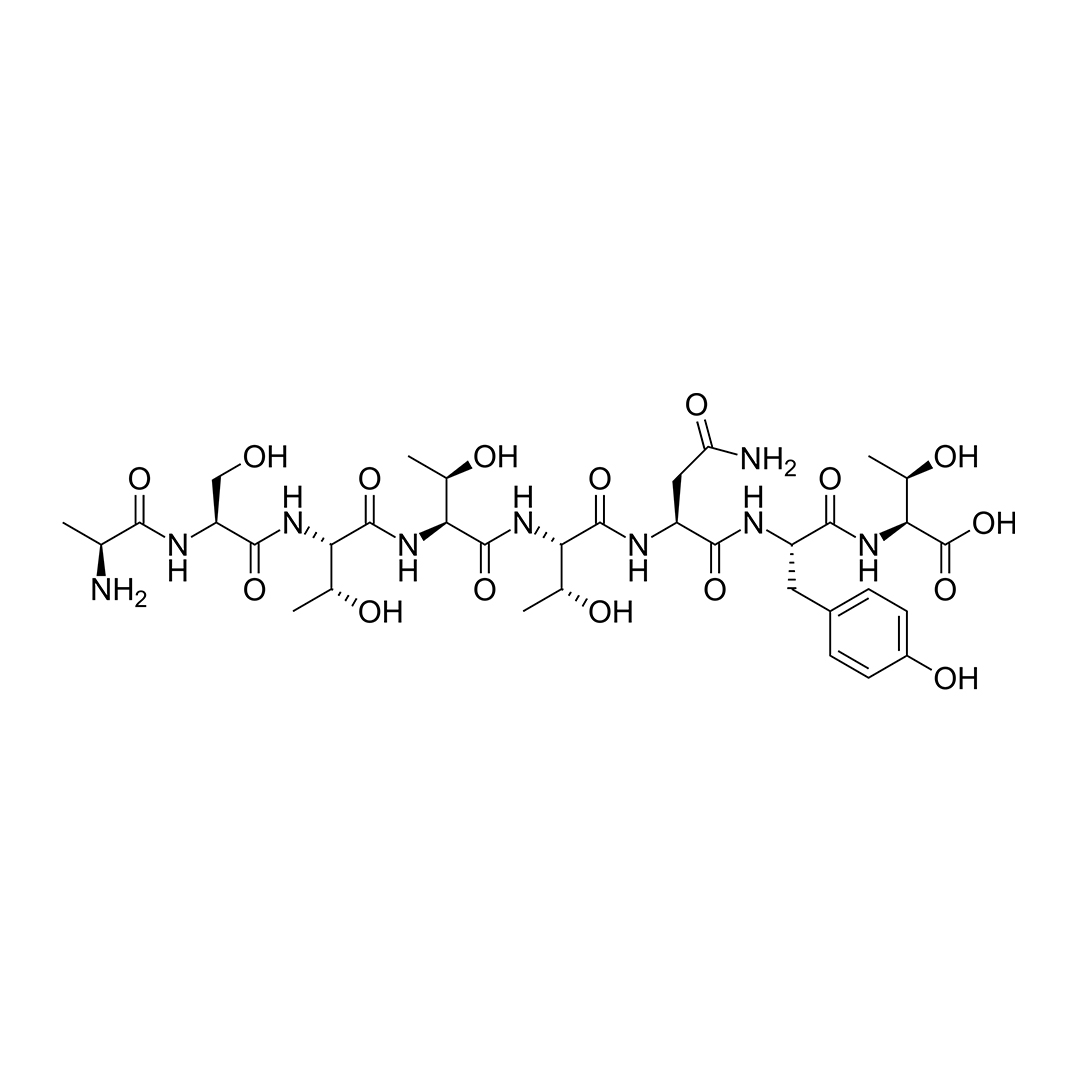
1) The analogous to synthetic Peptide T, d-Ala-Peptide T amide (DAPTA), was shown to inhibit the binding of the HIV infection to human T cells in vitro, as well as inhibit the binding of HIV envelope to brain membranes. While conducting further research on the potential of Peptide T to treat HIV, it was discovered that psoriasis was improved as a side effect of treatment. However, the research team that conducted the initial study was not able to identify the mechanism through which Peptide T treats the autoimmune disorder. Current hypotheses suggest that Peptide T may be capable of blocking CD4 receptors and preventing the penetration of the retrovirus causing psoriatic symptoms, or that the peptide directly affects the functioning of the CD4+ cells throughout the psoriatic lesions. The psoriatic lesions also house an increased number of a beta-chemokine, RANTES. It is also important to note that lymphomononuclear cells are crucial to the inflammatory process as the play a role in not only initiating but maintaining the process through cascade mechanisms that include inflammatory cytokines and chemokines such as IL-2 and RANTES, respectively [3].
The study conducted by the research team of Raychaudhuri et. al included 15 patients experiencing moderate to severe symptoms of psoriasis. There were 14 male and 1 female test subjects of the average age of 39 years old. Five individuals without psoriasis were also included in the study to act as a control group. There were 4 male and 1 female test subjects of the average age of 37 years old. Heparinized blood samples were collected from each test subject and subjected to gradient centrifugation in order to isolate peripheral blood mononuclear cells (PBMC). PBMCs were then washed three times with a balanced salt solution, followed by resuspension in a complete medium composed of RPMI-1640, 1% penicillin, 2mM glutamine, streptomycin, and 10% fetal calf serum [3]. The purity of monocytes and lymphocytes found in the sample was assessed by alpha-naphthyl acetate esterase staining and indirect fluorescent antibody staining, respectively.
2) Psoriasis is typically associated with dysfunction of the Langerhans cells related to their ability to migrate from the epidermis of the skin. In their role as dendritic cells, Langerhans cells play an important role in the immune system. Typically these cells activate in response to a specific stimulus, however, in individuals with psoriasis, this response was almost completely absent [4]. The research team of Wang et. al examined dendritic cells marked by protein S-100 throughout the suprabasal epidermal layers [5].
These dendritic cells were found to be Langerhans’ cells that were further investigated for their response to treatment with peptide T in psoriatic lesioned skin. There were nine patients experiencing symptoms of psoriasis that were administered treatment with peptide T. Over a 28 day experimental treatment period each test subject received a daily, 2 mg dose of the peptide mixed in with 500 ml of saline. Every week throughout the treatment sections of the involved skin were analyzed using S-100 antiserum with indirect immunofluorescence [5].
3) Neuropsychiatric illnesses such as mood and anxiety disorders are very common in patients with HIV and AIDS. In addition to neuropsychiatric illnesses, cognitive impairment, typically in the form of dementia, is linked to HIV infection. The research team of Heseltine et. al examined whether peptide T could be considered an effective treatment for cognitive impairments related to HIV, considering that the peptide has shown to protect neurons and brain tissue by inhibiting the binding of gp120.
Peptide T was administered to test subjects intranasally in 2 mg doses 3 times a day for 6 months. Several variables, including CD4+ count, antiretroviral therapy, and the severity of impairment, were taken into account when randomizing participants into study groups. Inclusion in the study was based on whether an individual was HIV-seropositive with neuropsychological (NP) screening test scores indicating the presence of cognitive deficits. The NP screening test yielded 23 scores from each participant that were then standardized to develop a global score [6].
The test was administered prior to experiment and at the end of the study. The primary efficacy endpoint the research team was comparing was the change in global NP scores after 6 months of experimental treatment with peptide T. Secondary measures assessed by the research team were 7 cognitive domain and deficit scores. These scores were related to both global and domain performance of the participants on the NP screening test. In addition to the initial 6 months of treatment, any test subject that completed both the baseline and study endpoint NP screening were included in further efficacy analyses that were meant to examine both baseline NP deficits and C4+ cell counts [6].
Discussion
1) The results of the study conducted by Raychaudhuri et. al reported upon the inhibitory effects of DAPTA on RANTES and fmlp-induced chemotaxis of monocytes and lymphocytes. Overall, the data found that the inhibitory effects of DAPTA peaked at 10^-9, confirmed through analysis of variance testing. However, the antichemotactic qualities of DAPTA remain unclear, however, it has been suggested that it may be receptor-mediated considering that Peptide T has been shown to competitively bind with RANTES and fmlp receptors [3].
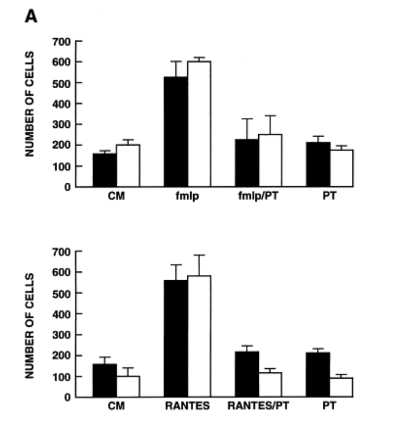
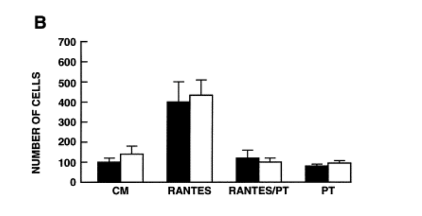
Figure 1: Effects of DAPTA on RANTES-mediated (A) monocytes and (B) lymphocytes chemotaxis.
2) Results of the study conducted by Wang et. al reported that prior to treatment with peptide T and in comparison to the healthy cells of the control group, there were significantly reduced numbers of Langerhans cells throughout the epidermal layer of skin affected by psoriasis plaques. It is important to mention that in some cases the Langerhans cells in the epidermis of individuals with psoriasis were completely gone. While the amount of Langerhans cells in the dermis was significantly diminished, the number of dendritic cells in the dermal layer of skin increases and tends to gather in clusters around different vascular structures [5].
Psoriasis is thought to be caused by the loss of Langerhans cells from activation in the immune system and migration from the epidermis to lymph vessels. However, following treatment with peptide T, four out of the nine patients included in the study experienced significant histopathological improvements in their psoriasis. Any improvements were characterized as a reduction in dendritic cells in the dermal layer of skin, and an increase in the Langerhans cells in the epidermal layer of skin. The increase in Langerhans cells and their corresponding changes in distribution and density indicate the occurrence of cellular rearrangement during and/or after the course of treatment with peptide T [5].
3) The results of the study conducted by Heseltine et. al did not find a statistically significant difference in global NP screening test scores, deficit scores, or individual domains, when comparing the experimental group treated with peptide T and the control group. However, pilot studies found that administration of peptide T to HIV-seropositive patients with impaired cognitive functioning found that the peptide was linked to improved cognition. That being said, further research should be conducted in order to thoroughly investigate the relationship between peptide T administration and cognitive impairments [6].
While comparison of the NP screening test scores resulted in inconclusive data, the additional analyses conducted examining changes in NP deficits and CD4+ cell counts revealed that these measures saw greater improvement in the experimental groups treated with peptide T. Improvements specifically occurred in patients that had a CD4+ cell count above 200 cells/µL at the beginning of the study. Similarly, improvements in NP global deficit scores following treatment with peptide T were more pronounced in patients with baseline scores of at least 0.5. Additionally, it was mentioned that general cognitive deterioration was found to be more common amongst the participants in the control group [6].
Disclaimer
**LAB USE ONLY**
*This information is for educational purposes only and does not constitute medical advice. THE PRODUCTS DESCRIBED HEREIN ARE FOR RESEARCH USE ONLY. All clinical research must be conducted with oversight from the appropriate Institutional Review Board (IRB). All preclinical research must be conducted with oversight from the appropriate Institutional Animal Care and Use Committee (IACUC) following the guidelines of the Animal Welfare Act (AWA).
Citations
[1] Sáez-Torres I, Espejo C, Pérez JJ, Acarín N, Montalban X, Martínez-Cáceres EM. Peptide T does not ameliorate experimental autoimmune encephalomyelitis (EAE) in Lewis rats. Clin Exp Immunol. 2000 Jul;121(1):151-6. doi: 10.1046/j.1365-2249.2000.01259.x. PMID: 10886253; PMCID: PMC1905669.
[2] Apostolopoulos V, Bojarska J, Chai TT, Elnagdy S, Kaczmarek K, Matsoukas J, New R, Parang K, Lopez OP, Parhiz H, Perera CO, Pickholz M, Remko M, Saviano M, Skwarczynski M, Tang Y, Wolf WM, Yoshiya T, Zabrocki J, Zielenkiewicz P, AlKhazindar M, Barriga V, Kelaidonis K, Sarasia EM, Toth I. A Global Review on Short Peptides: Frontiers and Perspectives. Molecules. 2021 Jan 15;26(2):430. doi: 10.3390/molecules26020430. PMID: 33467522; PMCID: PMC7830668.
[3] Raychaudhuri SK, Raychaudhuri SP, Farber EM. Anti-chemotactic activities of peptide-T: a possible mechanism of actions for its therapeutic effects on psoriasis. Int J Immunopharmacol. 1998 Nov;20(11):661-7. doi: 10.1016/s0192-0561(98)00020-4. PMID: 9848397.
[4] Cumberbatch M, Singh M, Dearman RJ, Young HS, Kimber I, Griffiths CE. Impaired Langerhans cell migration in psoriasis. J Exp Med. 2006 Apr 17;203(4):953-60. doi: 10.1084/jem.20052367. Epub 2006 Mar 27. PMID: 16567387; PMCID: PMC2118293.
[5] Wang L, Hilliges M, Talme T, Marcusson JA, Wetterberg L, Johansson O. Rearrangement of S-100 immunoreactive Langerhans’ cells in human psoriatic skin treated with peptide T. J Dermatol Sci. 1995 Jan;9(1):20-6. doi: 10.1016/0923-1811(94)00346-g. PMID: 7727353.
[6] Heseltine PN, Goodkin K, Atkinson JH, Vitiello B, Rochon J, Heaton RK, Eaton EM, Wilkie FL, Sobel E, Brown SJ, Feaster D, Schneider L, Goldschmidts WL, Stover ES. Randomized double-blind placebo-controlled trial of peptide T for HIV-associated cognitive impairment. Arch Neurol. 1998 Jan;55(1):41-51. doi: 10.1001/archneur.55.1.41. PMID: 9443710.
PEPTIDES PREFER THE COLD
Keep peptide vials refrigerated at all times to reduce peptide bond breakdown. DO NOT FREEZE. Most peptides, especially shorter ones, can be preserved for weeks if careful.
Always swab the top of the vial with an alcohol wipe, rubbing alcohol or 95% ethanol before use.
Before drawing solution from any dissolved peptide vial, fill the pin with air to the same measurement you will be filling with solution, ie. if you plan to take 0.1 ml, first fill the pin with 0.1ml of air, push the air into the vial, and then draw the peptide back up to the 0.1 ml marker. Doing so will maintain even pressure in the vial. Always remember to remove air bubbles from the pin by flicking it gently, pin side up, and pushing bubbles out. In addition, push out a tiny amount of solution to ensure there is no air left in the metal tip.
ONLY MIX WITH STERILE BACTERIOSTATIC WATER
The purity and sterility of bacteriostatic water are essential to prevent contamination and to preserve the shelf-life of dissolved peptides.
Push the pin through the rubber stopper at a slight angle, so that you inject the bacteriostatic water toward the inside wall of the vial, not directly onto the powder.
Lyophilized peptide should be stored at -20°C (freezer), and the reconstituted peptide solution at 4°C (refrigerated). Do not freeze once reconstituted.
NEVER SHAKE A VIAL TO MIX.
Air bubbles are unfavorable to the stability of proteins.
Peptide T is sold for laboratory research use only. Terms of sale apply. Not for human consumption, nor medical, veterinary, or household uses. Please familiarize yourself with our Terms & Conditions prior to ordering.









 1 milligram vial, 5 milligrams vial, 10 milligrams vial (lyophilized/freeze-dried)




Reviews
There are no reviews yet.