


Description
Teduglutide Peptide








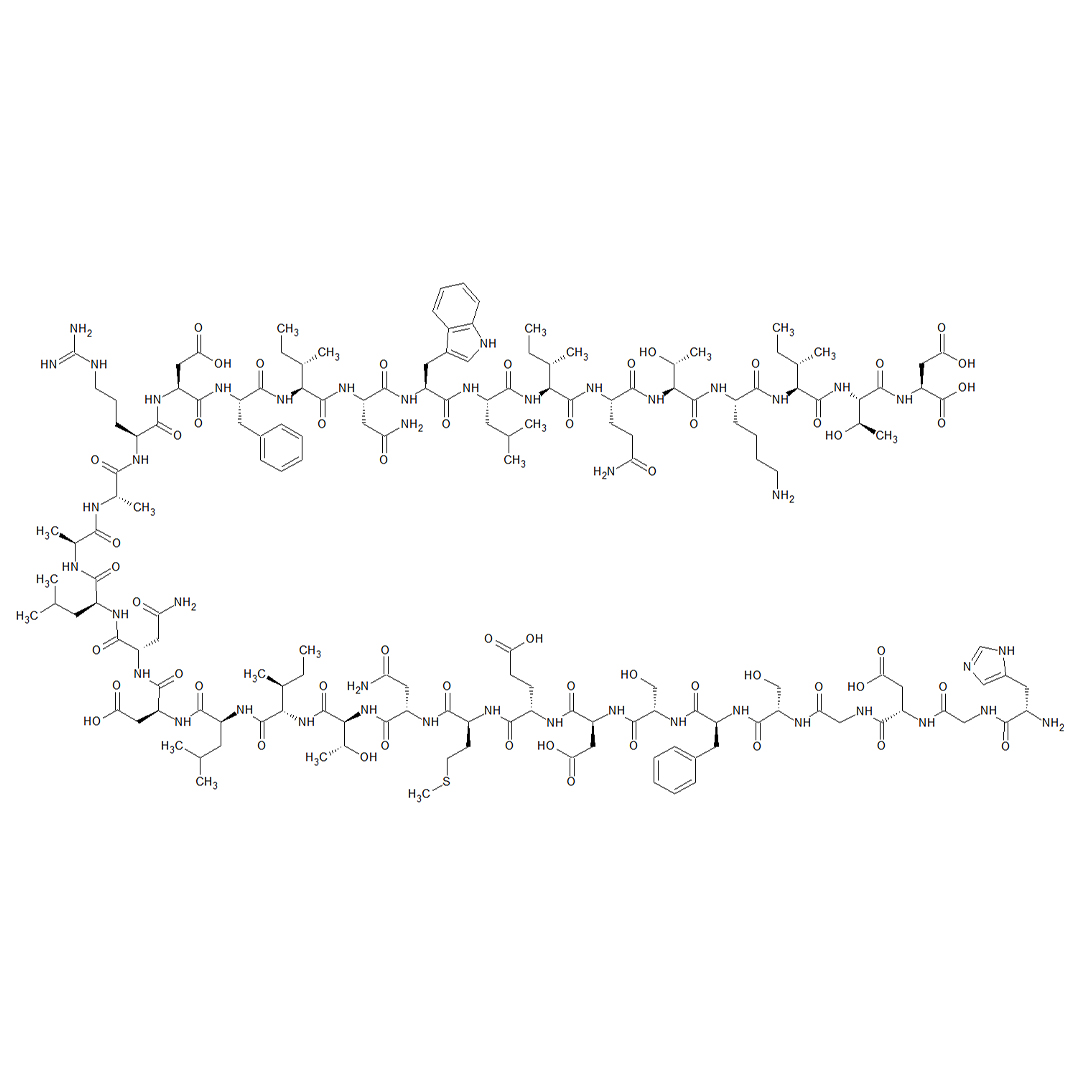
| CAS Number | 197922-42-2 |
| Other Names | Gattex, Revestive, ALX-0600, UNII-7M19191IKG, GLP2-2G, HSDB 8337 |
| IUPAC Name | (2S)-2-[[(2S,3R)-2-[[(2S,3S)-2-[[(2S)-6-amino-2-[[(2S,3R)-2-[[(2S)-5-amino-2-[[(2S,3S)-2-[[(2S)-2-[[(2S)-2-[[(2S)-4-amino-2-[[(2S,3S)-2-[[(2S)-2-[[(2S)-2-[[(2S)-2-[[(2S)-2-[[(2S)-2-[[(2S)-2-[[(2S)-4-amino-2-[[(2S)-2-[[(2S)-2-[[(2S,3S)-2-[[(2S,3R)-2-[[(2S)-4-amino-2-[[(2S)-2-[[(2S)-2-[[(2S)-2-[[(2S)-2-[[(2S)-2-[[(2S)-2-[[2-[[(2S)-2-[[2-[[(2S)-2-amino-3-(1H-imidazol-5-yl)propanoyl]amino]acetyl]amino]-3-carboxypropanoyl]amino]acetyl]amino]-3-hydroxypropanoyl]amino]-3-phenylpropanoyl]amino]-3-hydroxypropanoyl]amino]-3-carboxypropanoyl]amino]-4-carboxybutanoyl]amino]-4-methylsulfanylbutanoyl]amino]-4-oxobutanoyl]amino]-3-hydroxybutanoyl]amino]-3-methylpentanoyl]amino]-4-methylpentanoyl]amino]-3-carboxypropanoyl]amino]-4-oxobutanoyl]amino]-4-methylpentanoyl]amino]propanoyl]amino]propanoyl]amino]-5-carbamimidamidopentanoyl]amino]-3-carboxypropanoyl]amino]-3-phenylpropanoyl]amino]-3-methylpentanoyl]amino]-4-oxobutanoyl]amino]-3-(1H-indol-3-yl)propanoyl]amino]-4-methylpentanoyl]amino]-3-methylpentanoyl]amino]-5-oxopentanoyl]amino]-3-hydroxybutanoyl]amino]hexanoyl]amino]-3-methylpentanoyl]amino]-3-hydroxybutanoyl]amino]butanedioic acid |
| Chemical Structure | H-His-Gly-Asp-Gly-Ser-Phe-Ser-Asp-Glu-Met-Asn-Thr-Ile-Leu-Asp-Asn-Leu-Ala-Ala-Arg-Asp-Phe-Ile-Asn-Trp-Leu-Ile-Gln-Thr-Lys-Ile-Thr-Asp-OH |
| Molecular Formula | C₁₆₄H₂₅₂N₄₄O₅₅S |
| Molecular Weight | 3752.1 |
| Purity | ≥99% Pure (LC-MS) |
| Powder Availability |  5 milligrams vial (lyophilized/freeze-dried) |
| Storage Condition | Store cold, keep refrigerated. Do NOT freeze. |
| Terms | All products are for laboratory developmental research USE ONLY. Products are not for human consumption. |
What is Teduglutide?
Teduglutide is a synthetic analogue of glucagon-like peptide-2 (GLP-2), an intestinotrophic hormone involved in regulating growth, repair, and function of the gastrointestinal tract. Engineered to resist rapid enzymatic degradation, teduglutide has an extended half-life compared to native GLP-2, allowing for sustained biological activity. Its primary clinical application is in the management of short bowel syndrome (SBS), where it enhances intestinal absorption by promoting mucosal growth, increasing villus height, and improving nutrient and fluid uptake. By targeting the underlying pathophysiology of intestinal insufficiency rather than merely alleviating symptoms, teduglutide represents an important therapeutic advancement for patients requiring parenteral support.
Main Research Findings
1) Teduglutide was found to reduce the need for parenteral support in patients with SBS and intestinal failure.
2) Teduglutide has the potential to be used as an effective method of inducing remission and mucosal healing in patients with Crohn’s disease.
Selected Data
1) The study conducted by the research team of Jeppesen et al included eligible participants aged 18 years or older with a confirmed history of SBS who had been dependent on parenteral support (PS) for at least 12 consecutive months. PS dependency was defined as requiring intravenous nutrition or fluids at least three times per week to meet caloric, fluid, or electrolyte needs due to malabsorption. Importantly, the study did not require that patients have attempted weaning from PS prior to enrollment. Inclusion and exclusion criteria were carefully outlined, and although individuals with prior neoplasms were not automatically excluded, those with ongoing radiation enteritis or significant radiation-related intestinal damage were not permitted to participate. Additional exclusion criteria included any condition deemed by the investigator to put the patient at undue risk or to interfere with study integrity. Throughout the trial, participants were expected to maintain their regular diet and fluid intake, and any changes in ongoing treatments were avoided unless medically necessary [1].
The trial followed a randomized, double-blind, placebo-controlled, parallel-group design consisting of two stages. Stage 1 included screening, optimization, and stabilization, while Stage 2 consisted of the 24-week treatment period. During Stage 1, eligible patients could undergo up to 8 weeks of PS optimization, which aimed to achieve a stable target urine output of 1.0 to 2.0 liters per day. This target was selected to minimize dehydration risks while avoiding overhydration, given that the patient population was prone to diarrhea and fluid imbalances. Following optimization, patients entered a stabilization period of 4 to 8 weeks, during which PS usage had to match prescribed volumes and oral fluid intake and urine output were required to remain within 25% of baseline levels. Stability criteria also included maintaining urine volumes of 2 to 4 liters over a 48-hour period. If patients did not stabilize, they could repeat Stage 1 once; failure to stabilize after two attempts resulted in exclusion from randomization.
In Stage 2, 86 patients who achieved stabilization were randomized in a 1:1 ratio to receive either daily subcutaneous teduglutide at a dose of 0.05 mg/kg or placebo for 24 weeks. Randomization was computer-generated and stratified by baseline PS volume, categorized as greater or less than 6 liters per week. The study drug was administered at approximately the same time each day, with injection sites including the abdomen, thigh, or arm. Scheduled visits and evaluations occurred at weeks 1, 2, 4, 8, 12, 16, 20, and 24. Patients were required to use electronic diaries to record PS volume daily, while 48-hour oral fluid intake, urinary output, and dosing information were logged during optimization, stabilization, and treatment. If significant changes in oral intake were noted, clinicians considered whether PS adjustments were necessary [1].
PS management during the trial followed a structured protocol. In the optimization phase, PS was adjusted in 10% increments to achieve target hydration, with measurements based on 48-hour oral intake and urine output. Laboratory tests and clinical evaluations, including body weight and hydration status, were used to guide decisions. During the treatment phase, PS reductions were attempted at every scheduled visit, provided that urine output and hydration parameters remained stable. Reductions typically ranged between 10% and 30% of the stabilized baseline PS volume and were considered only if urinary output exceeded baseline levels by at least 10%. The decision to reduce PS volume, eliminate PS on certain days, or adjust PS composition was based on both clinical judgment and patient preference. Safety evaluations followed each reduction, assessing hydration, nutritional status, and laboratory values. If a reduction was not tolerated, patients returned to the previously stable PS volume, with the option to attempt reduction again at subsequent visits.
The primary efficacy endpoint was the proportion of patients classified as responders, defined as achieving at least a 20% reduction in weekly PS volume by week 20 and maintaining that reduction at week 24. Secondary endpoints included absolute and percentage changes in PS volume, the number of patients who discontinued PS completely, and the duration of time to discontinuation. Exploratory endpoints included the assessment of treatment effects at each visit, reductions in the number of PS days per week, and changes in plasma citrulline levels, which served as a biomarker of enterocyte mass. Another exploratory measure, the fluid composite effect (FCE), was developed to capture teduglutide’s combined impact on intestinal fluid absorption. The FCE quantified the net effects of PS volume reduction, decreased oral fluid intake, and increased urine output [1].
Safety assessments were comprehensive and included monitoring for adverse events, vital signs, physical examinations, electrocardiograms, and laboratory tests. Additional safety measures included evaluation of body weight, urine output, and the development of antibodies to teduglutide. Because injection site reactions and stoma-related changes could reveal treatment assignment, different clinicians were designated to evaluate safety and to adjust PS volumes to maintain study blinding. For patients with a colon, baseline colonoscopy was required prior to study entry to exclude the presence of polyps or active intestinal disease [1].
In summary, this trial sought to evaluate the efficacy and safety of teduglutide in reducing PS requirements among patients with SBS. Through careful patient selection, structured optimization and stabilization, randomized treatment allocation, and clearly defined endpoints, the study aimed to determine whether teduglutide could meaningfully enhance intestinal absorption, reduce reliance on parenteral support, and improve hydration and nutritional stability while maintaining patient safety [1].
2) This clinical trial performed by Buchman et al investigated the efficacy and safety of teduglutide, a GLP-2 analogue, in patients with moderate-to-severe Crohn’s disease (CD). In total, 115 individuals were screened, of whom 100 met eligibility criteria and were randomized to receive placebo or one of three teduglutide treatment regimens, including 0.05, 0.10, or 0.20 mg/kg. All dosing was administered once daily via subcutaneous injection. To ensure blinding, the trial design included three placebo groups, matched in injection volume to the active treatment arms, though placebo data were ultimately pooled for analysis. Randomization was stratified according to disease location, including isolated colon, ileocolonic involvement, or other classifications [2].
Study visits occurred at baseline and then during treatment at weeks 2, 4, and 8, with an additional follow-up after a 12-week open-label extension phase. The primary endpoint was clinical response or remission at week 8, defined respectively as a ≥100-point decrease in the Crohn’s Disease Activity Index (CDAI) or achievement of a CDAI ≤150. Secondary endpoints included earlier assessments of response and remission at weeks 2 and 4, average changes in CDAI over time, reduction in the number of liquid bowel movements, and decreases in CRP levels. All participants completing the initial 8-week induction phase were offered the option to enroll in an open-label extension, during which they received teduglutide 0.1 mg/kg daily for 12 weeks. This was followed by a 4-week drug-free observation period, intended to evaluate both longer-term therapeutic effects and durability of clinical responses in patients who had not responded to the initial course.
Eligibility for participation required a confirmed diagnosis of CD by standard diagnostic modalities including endoscopy, histology, and radiology. Disease severity had to be reflected by a CDAI score of 220–450. Participants were male or female adults meeting defined hematologic, renal, and hepatic function thresholds: hematocrit ≥30%, white blood cell count ≥3.5 × 10⁹/L, platelet count ≥100 × 10⁹/L, and serum creatinine and blood urea nitrogen ≤1.5 times the upper limit of normal. Liver function tests (ALT, AST ≤2× ULN; alkaline phosphatase ≤1.5× ULN; total bilirubin ≤1.25× ULN) were also required to be within safe ranges. Screening included stool samples to exclude infectious etiologies such as enteric pathogens, parasites, and Clostridium difficile. Inflammatory activity was confirmed through CRP levels ≥1.0 mg/dL or, in cases where CRP was lower, through alternative markers such as elevated erythrocyte sedimentation rate or radiologic or endoscopic evidence of active disease [2].
Concomitant medications were permitted under defined stability requirements to ensure consistent background therapy. These included biologic monoclonal antibodies, corticosteroids, immunosuppressants such as methotrexate, cyclosporine, tacrolimus, azathioprine, or 6-mercaptopurine. Additional permitted therapies were mesalamine or corticosteroid enemas, codeine-containing antidiarrheals, sulfasalazine or other 5-aminosalicylates, and nonsteroidal anti-inflammatory drugs including aspirin.
Exclusion criteria were comprehensive, designed to protect patient safety and avoid confounding factors. These included pregnancy or nursing, nutritional dependence on parenteral or enteral support, extremes of body weight, structural complications such as bowel obstruction, strictures, or adhesions likely to predispose obstruction, and active gastrointestinal perforation or hemorrhage. Patients with three or more external fistulas, ostomies, or imminent need for surgery within 12 weeks were excluded, as were those with recent abscesses. Additional exclusions involved significant comorbidities such as Cushing’s syndrome, HIV, hepatitis B or C infection, thromboembolic disease, clinically significant cardiac disease, and a history of cancer other than localized non-melanoma skin cancers or in situ cervical carcinoma. Subjects with acute infections requiring antibiotics, or those recently exposed to experimental drugs or growth factors, were also barred [2].
Teduglutide was supplied as a lyophilized powder requiring reconstitution with sterile water for injection. The first dose was prepared and administered under supervision, while subsequent doses were self-administered. The formulation included stabilizing excipients such as L-histidine, mannitol, and sodium phosphate. Placebo injections were identically packaged and reconstituted, containing only the excipients. For patients weighing more than 60 kg who were assigned to the highest dose of 0.20 mg/kg, two daily injections were required. Injections were administered into abdominal quadrants or thighs, rotating sites to reduce local irritation. If adverse events occurred, dosing could be interrupted for up to five days during the 8-week trial [2].
Efficacy assessments centered on CDAI-based outcomes, bowel movement frequency, inflammatory markers including CRP, white blood cell counts, and platelet counts, and time to clinical response or remission. Plasma citrulline, a biomarker of enterocyte mass and mucosal integrity, was also measured by ion-exchange chromatography at baseline and during follow-up. Low citrulline levels indicated epithelial injury, whereas normalization suggested mucosal healing. Safety evaluations included routine clinical monitoring of vital signs, body weight, electrocardiograms, laboratory analyses, and documentation of adverse events. Immunogenicity testing was performed to detect antibodies against teduglutide and process-related E. coli proteins using validated immunoassays. Binding specificity was confirmed by competitive inhibition assays with unlabeled teduglutide.
Treatment compliance was closely tracked through daily patient diaries, recording injections and adverse effects. Additionally, medication vials, both used and unused, were returned at the final visit for counting. Compliance was calculated as the ratio of doses received to scheduled doses, with ≥80% adherence defined as acceptable. This method of assessing compliance at the conclusion, rather than at each interim visit, was intended to approximate real-world patient behavior [2].
Overall, this study design provided an evaluation of teduglutide’s therapeutic potential in Crohn’s disease, combining randomized, placebo-controlled induction therapy with an open-label extension to examine both short-term efficacy and durability of response. The inclusion of biochemical, clinical, and safety endpoints allowed for a comprehensive assessment of the drug’s effects on disease activity, mucosal healing, and patient tolerability [2].
Discussion
1) Jeppesen et al conducted a research trial investigating effects of teduglutide on the need for parenteral support in patients with SBS. Baseline demographic and medication characteristics were well balanced between the teduglutide and placebo groups, ensuring comparability across treatment arms. A subset of patients required optimization of parenteral nutrition or intravenous (PN/IV) fluid volumes before entering the stabilization period. Specifically, 17 patients in the teduglutide group and 22 patients in the placebo group underwent optimization, while 26 teduglutide patients and 21 placebo patients proceeded directly from screening to stabilization. However, 12 of these patients, evenly split between treatment arms, were unable to maintain stability for the required 4-week period and were returned to the optimization stage. On average, patients in the teduglutide group spent 19 ± 23 days in optimization, compared with 23 ± 24 days in the placebo group [1].
The primary efficacy endpoint of the trial was the responder rate, defined as achieving a 20% to 100% reduction in weekly PS volume at week 20 and sustaining this reduction through week 24. Results demonstrated a significant advantage for teduglutide, with 63% of patients achieving responder status, compared to 30% of patients in the placebo group. Small bowel length was not found to predict response, and although patients without colon continuity tended to show higher response rates compared with those with colon continuity, the difference was not statistically significant.
Secondary endpoints reinforced the primary findings. At all study visits, teduglutide recipients demonstrated greater reductions in PS volume compared with placebo-treated patients. By week 24, mean PS volume reduction in the teduglutide group was 4.4 ± 3.8 liters per week, from a baseline of 12.9 ± 7.8 liters per week. In contrast, the placebo group experienced a mean reduction of 2.3 ± 2.7 liters per week, from a baseline of 13.2 ± 7.4 liters per week. Between-group differences were statistically significant beginning at week 8 and remained significant through week 24. When expressed as a percentage, reductions at week 24 averaged 32% ± 19% for the teduglutide group, compared with 21% ± 25% for the placebo group, with significant differences emerging by week 12 and persisting through week 24. Despite these improvements, no patient in either group was fully weaned from PS by the 24-week endpoint [1].
Exploratory analyses provided additional insights. At week 24, 77% of patients in the teduglutide group achieved a response, compared to 46% of patients in the placebo group. Furthermore, 54% of teduglutide-treated patients reduced their weekly PS usage by at least one day, with 21 individuals experiencing either a 1-day reduction or a reduction of two or more days. In contrast, only 23% of placebo patients achieved this outcome. Oral fluid intake was significantly higher in placebo recipients than in teduglutide-treated patients at weeks 12, 20, and 24, highlighting teduglutide’s effect on fluid absorption. Correspondingly, the FCE, which integrates PS volume reduction, reduced oral fluid intake, and increased urine output, showed significantly greater improvement with teduglutide. At week 24, mean FCE reduction was 5.4 ± 6.0 liters per week for teduglutide compared with 1.1 ± 4.3 liters per week for placebo [1].
Teduglutide also produced significant biological changes, particularly in plasma citrulline concentrations, a biomarker of enterocyte mass. Baseline citrulline levels were similar between groups measuring at 18.4 ± 9.5 μmol/L for teduglutide vs 17.5 ± 9.0 μmol/L for placebo. After 24 weeks, patients receiving teduglutide exhibited a mean increase of 20.6 ± 17.5 μmol/L, compared with only 0.7 ± 6.3 μmol/L in the placebo group. This finding supported teduglutide’s intestinotrophic effect. Changes in body weight were more modest. Patients in the teduglutide group gained an average of 1.0 ± 3.7 kg over baseline, a nonsignificant trend, while placebo patients lost an average of 0.6 ± 2.8 kg, also nonsignificant.
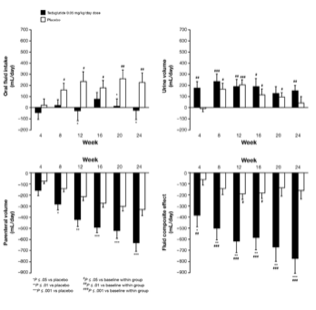
Figure 1: Differences between the teduglutide- and placebo-treated group in oral fluid intake, urine volume, parenteral volume, and fluid composite effects across the 24 week experimental period.
In conclusion, this phase 3 trial demonstrated that teduglutide significantly increased the proportion of SBS patients achieving meaningful reductions in PS requirements compared with placebo. Benefits were observed across primary, secondary, and exploratory endpoints, including reductions in PS volume, fewer PS days per week, improved fluid absorption, and increases in plasma citrulline. The therapy was generally well tolerated, with most adverse events being gastrointestinal in nature and manageable. No new safety concerns were identified, and antibody development did not compromise efficacy. These findings establish teduglutide as an effective and safe treatment option for enhancing intestinal absorption and reducing PS dependence in patients with SBS [1].
2) The trial conducted by Buchman et al enrolled patients with moderate-to-severe Crohn’s disease and assessed demographic, disease, and treatment characteristics across placebo and teduglutide groups. Baseline features were well balanced, with similar distributions of age, sex, race, and disease location. 57% of participants had ileocolonic disease, while 33% had isolated small bowel involvement and 17% had isolated colonic disease. Smoking was common but evenly distributed across groups. Body weight was slightly higher in the placebo group, though this was not statistically significant, and remained stable throughout the study. The majority of subjects had previously undergone surgery for Crohn’s disease, and concomitant medication use, including corticosteroids and immunosuppressants, was broadly similar across groups, with no significant imbalances. A minority of subjects had perianal or rectovaginal fistulas [2].
Response rates, defined as a CDAI reduction of ≥100 points or CDAI ≤150, showed early improvements, with the most notable benefit in the 0.20 mg/kg/day teduglutide group. This group demonstrated a higher likelihood of remission as early as week 2, maintaining this trend across most timepoints. At week 8, remission rates reached 40% in the high-dose group based on intent-to-treat analysis, and 55.6% among those completing the full induction phase. This represented a 22.3% increase over placebo. In the maintenance phase, 50% of non-remitters at induction achieved remission with continued therapy, though some initial remitters did not sustain response by week 20. Remission appeared more frequent in nonsmokers, although response rates were similar between smokers and nonsmokers [2].
Disease activity, measured by mean CDAI reduction, declined across all groups, with the greatest improvements consistently observed in the high-dose teduglutide arm. Similarly, the number of liquid or soft bowel movements decreased most substantially in the 0.20 mg/kg/day group, with parallel improvements in abdominal pain subscores. Corticosteroid tapering was achieved in 12 of 17 patients receiving teduglutide, particularly in the high-dose group, compared to only one of four patients on placebo. However, corticosteroid rescue therapy was needed in seven teduglutide-treated patients and two placebo patients. Due to small subgroup sizes, the effects of prior or concomitant immunosuppressive or biologic use on treatment response could not be meaningfully compared.
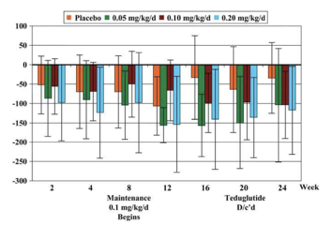
Figure 2: Changes in CDAI levels in both placebo and teduglutide treated groups across the experimental treatment period.
Inflammatory markers showed mixed results. Baseline CRP was slightly lower in the placebo group, and though CRP decreased slightly with teduglutide and rose with placebo, these changes were not statistically significant. Elevated CRP did not predict response or remission. White blood cell counts remained stable across all groups. Platelet counts increased modestly at week 2 in teduglutide groups but normalized thereafter. In contrast, plasma citrulline, a biomarker of enterocyte mass, increased significantly in all teduglutide groups compared to placebo, with the highest levels observed in patients achieving remission. By week 8, plasma citrulline values in responders exceeded normal reference ranges, suggesting substantial mucosal healing [2].
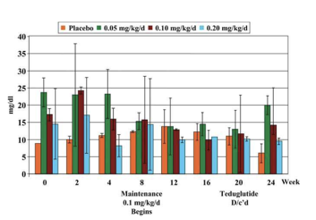
Figure 3: Changes in serum CRP levels in both placebo and teduglutide treated groups across the experimental treatment period.
Rescue therapy was required in a small number of participants across all groups, with one patient undergoing surgery for small bowel obstruction secondary to adhesions and volvulus rather than active Crohn’s disease. Overall, teduglutide, particularly at the 0.20 mg/kg/day dose, demonstrated promising trends toward improved remission rates, reductions in disease activity, enhanced mucosal healing, and corticosteroid-sparing effects, with an acceptable safety profile [2].
Disclaimer
**LAB USE ONLY**
*This information is for educational purposes only and does not constitute medical advice. THE PRODUCTS DESCRIBED HEREIN ARE FOR RESEARCH USE ONLY. All clinical research must be conducted with oversight from the appropriate Institutional Review Board (IRB). All preclinical research must be conducted with oversight from the appropriate Institutional Animal Care and Use Committee (IACUC) following the guidelines of the Animal Welfare Act (AWA).
Citations
[1] Jeppesen PB, Pertkiewicz M, Messing B, et al. Teduglutide reduces need for parenteral support among patients with short bowel syndrome with intestinal failure. Gastroenterology. 2012;143(6):1473-1481.e3. doi:10.1053/j.gastro.2012.09.007
[2] Buchman AL, Katz S, Fang JC, Bernstein CN, Abou-Assi SG; Teduglutide Study Group. Teduglutide, a novel mucosally active analog of glucagon-like peptide-2 (GLP-2) for the treatment of moderate to severe Crohn’s disease. Inflamm Bowel Dis. 2010;16(6):962-973. doi:10.1002/ibd.21117
PEPTIDES PREFER THE COLD
Keep peptide vials refrigerated at all times to reduce peptide bond breakdown. DO NOT FREEZE. Most peptides, especially shorter ones, can be preserved for weeks if careful.
Always swab the top of the vial with an alcohol wipe, rubbing alcohol or 95% ethanol before use.
Before drawing solution from any dissolved peptide vial, fill the pin with air to the same measurement you will be filling with solution, ie. if you plan to take 0.1 ml, first fill the pin with 0.1ml of air, push the air into the vial, and then draw the peptide back up to the 0.1 ml marker. Doing so will maintain even pressure in the vial. Always remember to remove air bubbles from the pin by flicking it gently, pin side up, and pushing bubbles out. In addition, push out a tiny amount of solution to ensure there is no air left in the metal tip.
ONLY MIX WITH STERILE BACTERIOSTATIC WATER
The purity and sterility of bacteriostatic water are essential to prevent contamination and to preserve the shelf-life of dissolved peptides.
Push the pin through the rubber stopper at a slight angle, so that you inject the bacteriostatic water toward the inside wall of the vial, not directly onto the powder.
Lyophilized peptide should be stored at -20°C (freezer), and the reconstituted peptide solution at 4°C (refrigerated). Do not freeze once reconstituted.
NEVER SHAKE A VIAL TO MIX.
Air bubbles are unfavorable to the stability of proteins.
Teduglutide is sold for laboratory research use only. Terms of sale apply. Not for human consumption, nor medical, veterinary, or household uses. Please familiarize yourself with our Terms & Conditions prior to ordering.


| File Name | View/Download |
| Coming Soon! |  |
VIEW CERTIFICATES OF ANALYSIS (COA)



Reviews
There are no reviews yet.