


Description
MRZ-9547 aka (R)-Phenylpiracetam Nootropic Powder








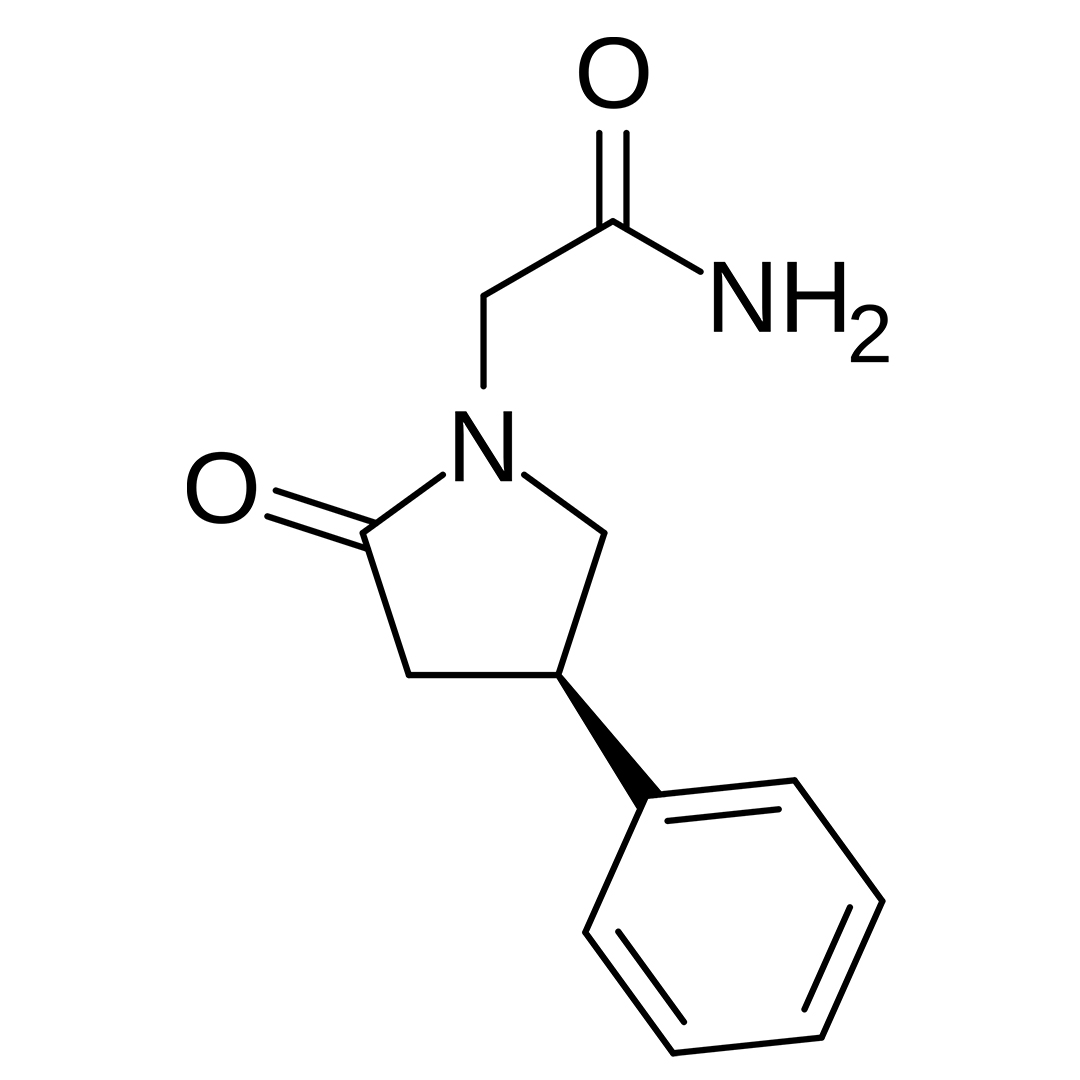
| CAS Number | 949925-07-9 |
| Other Names | (R)-Phenylpiracetam, (R)-Phenotropil, (R)-Fenotropil, (R)-Fonturacetam, Arfonturacetam, N-Carbamoylmethyl-4(R)-phenyl-2-pyrrolidinone |
| IUPAC Name |
2-[(4R)-2-oxo-4-phenylpyrrolidin-1-yl]acetamide
|
| Molecular Formula | C₁₂H₁₄N₂O₂ |
| Molecular Weight | 218.25 |
| Purity | ≥99% Pure (LC-MS) |
| Liquid Availability | N/A |
| Powder Availability |  5 grams |
| Storage | Store in cool dry environment, away from direct sunlight. |
| Terms | All products are for laboratory developmental research USE ONLY. Products are not for human consumption. |
What is MRZ-9547?
MRZ-9547 is a nootropic compound that has attracted interest for its potential to enhance cognitive function through modulation of neuronal signaling and synaptic plasticity. Current evidence suggests that MRZ-9547 may improve learning, memory, and other higher-order cognitive processes by supporting neurotransmitter activity and promoting efficient communication between neurons. These mechanisms may enhance attention, information processing, and memory consolidation while minimizing many of the stimulant-like effects associated with traditional cognitive enhancers. Due to its novel pharmacological profile and potential neuroprotective properties, MRZ-9547 continues to be investigated as a promising candidate for improving cognitive performance and treating neurological disorders characterized by impaired learning and memory.
Main Research Findings
1) Treatment with MRZ-9547 was shown to have antiparkinsonism activity in early stages of the disease while also enhancing the antiparkinson effects of L-DOPA.
2) MRZ-9547 was found to increase progressive ratio responding to two unique tasks in an animal model of neurological impairment.
Selected Data
1) The study by Dekundy and colleagues was designed to evaluate the pharmacological effects of MRZ-9547, a novel dopamine transporter (DAT) inhibitor, in several well-established rodent models of Parkinson’s disease (PD). Although MRZ-9547 had originally been developed as a potential treatment for fatigue associated with Parkinson’s disease, its effects on motor function and its interaction with the standard antiparkinsonian therapy L-3,4-dihydroxyphenylalanine (L-DOPA) had not been thoroughly investigated. Because dopamine transporter inhibitors increase extracellular dopamine concentrations by preventing dopamine reuptake, the investigators hypothesized that MRZ-9547 might improve motor deficits associated with dopamine depletion while potentially enhancing the therapeutic effects of L-DOPA. At the same time, they sought to determine whether combining MRZ-9547 with L-DOPA would worsen L-DOPA-induced dyskinesia (LID), one of the most significant long-term complications of Parkinson’s disease treatment [1].
Adult male Sprague-Dawley rats weighing between 200 and 600 g were used throughout the investigation. Animals were housed under standardized laboratory conditions with controlled temperature, humidity, and a 12-hour light-dark cycle while receiving unrestricted access to food and water. After arrival, all rats underwent at least six days of acclimatization before experimentation began. MRZ-9547 was synthesized by Merz Pharmaceuticals and dissolved in physiological saline before intraperitoneal administration at doses ranging from 25 to 100 mg/kg. Additional pharmacological agents included haloperidol, reserpine, α-methyl-p-tyrosine (AMPT), amphetamine, and L-DOPA administered together with the peripheral decarboxylase inhibitor benserazide. Drug doses were selected based on previous pharmacological studies and internal dose-finding experiments to ensure biologically relevant concentrations while remaining below maximum tolerated doses.
To determine whether MRZ-9547 possessed intrinsic antiparkinsonian activity, investigators employed several behavioral models of dopamine deficiency. In the haloperidol-induced hypolocomotion model, rats received haloperidol thirty minutes before behavioral testing to block dopamine D2 receptors and induce motor suppression. MRZ-9547 was administered immediately before testing, after which locomotor activity was measured continuously for two hours using automated activity chambers equipped with infrared photobeam arrays. Horizontal locomotion, activity within the central portion of the arena, and vertical rearing behavior were quantified at twenty-minute intervals to determine whether MRZ-9547 reversed dopamine antagonist-induced motor impairment [1].
A second behavioral model utilized combined administration of reserpine and AMPT to produce profound depletion of brain monoamines, thereby creating a more severe Parkinsonian state. Reserpine was administered twenty-four hours before testing, AMPT was injected three and one-half hours before testing, and MRZ-9547 was administered one hour before behavioral assessment. Locomotor activity was recorded using the same automated monitoring system employed in the haloperidol experiments. Additional experiments examined the interaction between MRZ-9547 and several doses of L-DOPA in monoamine-depleted animals to determine whether the compound enhanced the therapeutic response to dopamine replacement therapy.
To evaluate antiparkinsonian activity in a more clinically relevant model, the investigators produced unilateral lesions of the nigrostriatal dopaminergic pathway using 6-hydroxydopamine (6-OHDA). Adult rats underwent stereotaxic surgery in which 6-OHDA was injected into the right medial forebrain bundle under ketamine and xylazine anesthesia, selectively destroying dopaminergic neurons projecting to the striatum. After a recovery period of at least two weeks, lesion severity was verified using amphetamine-induced rotational behavior, and only animals exhibiting greater than 70% ipsilateral rotations were included in subsequent experiments. MRZ-9547 was administered either alone or together with low or high doses of L-DOPA, and rotational behavior was recorded automatically for three to six hours using computerized rotometry systems. Ipsilateral rotations indicated stimulation of residual dopaminergic terminals on the intact side of the brain, whereas contralateral rotations reflected the therapeutic effects of L-DOPA on the lesioned hemisphere. These experiments allowed investigators to determine whether MRZ-9547 possessed antiparkinsonian activity, enhanced the actions of L-DOPA, or altered the duration of L-DOPA’s motor effects [1].
The study also examined whether MRZ-9547 influenced L-DOPA-induced dyskinesia using the established 6-OHDA rat model of chronic L-DOPA treatment. Approximately five weeks after lesion surgery, rats received daily injections of L-DOPA and benserazide for three weeks to induce abnormal involuntary movements (AIMs), the rodent equivalent of dyskinesia observed in Parkinson’s disease patients. Animals demonstrating consistent dyskinetic responses were selected for pharmacological testing. During behavioral assessments, investigators who remained blinded to treatment allocation observed animals every twenty minutes over a three-hour period following drug administration. Dyskinesias were categorized into four subtypes: axial, limb, orolingual, and locomotive AIMs. Each subtype was scored on a standardized five-point severity scale ranging from zero, indicating absence of dyskinesia, to four, indicating continuous dyskinesia that could not be interrupted by external stimuli. A crossover study design allowed every animal to receive both MRZ-9547 and vehicle on separate testing days, minimizing variability between experimental groups while maintaining observer blinding throughout behavioral scoring.
To determine whether any interaction between MRZ-9547 and L-DOPA resulted from altered drug pharmacokinetics rather than pharmacodynamic mechanisms, the investigators performed in vivo brain microdialysis experiments. Guide cannulae were surgically implanted into the caudate-putamen of anesthetized rats, and microdialysis probes were inserted after postoperative recovery. Artificial cerebrospinal fluid was continuously perfused through the probes while extracellular fluid samples were collected every twenty minutes before and after administration of MRZ-9547, L-DOPA, or their combination. Samples were analyzed using liquid chromatography coupled with tandem mass spectrometry (LC-MS/MS) to quantify extracellular brain concentrations of both compounds over time. Pharmacokinetic parameters including maximum concentration (Cmax), time to peak concentration (Tmax), elimination half-life, and area under the concentration-time curve were calculated to determine whether coadministration altered brain exposure to either drug [1].
2) The study by Sommer and colleagues was designed to investigate the pharmacological profile and behavioral effects of MRZ-9547, a novel DAT inhibitor, as a potential treatment for motivational impairments characterized by reduced willingness to exert effort, such as fatigue, apathy, anergia, and psychomotor slowing. These symptoms are common in neurological and neuropsychiatric disorders including Parkinson’s disease, major depressive disorder, schizophrenia, multiple sclerosis, and inflammatory diseases, yet effective pharmacological treatments remain limited. Previous studies suggested that effort-related decision-making tasks in rodents provide valuable models for studying motivational dysfunctions and identifying compounds capable of increasing the willingness to work for reward. The investigators hypothesized that MRZ-9547, along with its less active l-enantiomer MRZ-9546, would enhance effort expenditure by increasing dopaminergic neurotransmission through inhibition of dopamine reuptake. To test this hypothesis, they combined receptor binding studies, in vitro functional assays, in vivo microdialysis, and multiple behavioral paradigms that measured progressive ratio responding and effort-based decision making in rats. In addition, MRZ-9547 was compared directly with several established dopaminergic stimulants, including methylphenidate, modafinil, and d-amphetamine, to determine its relative efficacy in promoting motivated behavior [2].
The first phase of the investigation focused on characterizing the molecular mechanism of MRZ-9547. Human recombinant dopamine transporters (DAT) were expressed in Chinese hamster ovary (CHO-K1) cells and used in receptor binding and dopamine uptake assays. Radioligand displacement studies employed radioactive RTI-55 to determine the affinity of MRZ-9547 and its stereoisomer MRZ-9546 for the dopamine transporter. Functional uptake assays measured inhibition of dopamine reuptake using tritiated dopamine ([³H]-dopamine), allowing investigators to determine the potency of each compound in blocking dopamine transport. Additional experiments assessed activity at the norepinephrine transporter (NET) to evaluate transporter selectivity. These in vitro studies established the pharmacological properties of MRZ-9547 before its behavioral effects were examined in vivo [2].
To determine whether MRZ-9547 entered the brain and produced sustained central nervous system exposure, separate microdialysis experiments were performed in adult male Sprague-Dawley rats. Animals underwent stereotaxic surgery during which guide cannulae and microdialysis probes were implanted into the caudate-putamen. After postoperative recovery, MRZ-9547 was administered intraperitoneally at doses ranging from 10 to 100 mg/kg. Artificial cerebrospinal fluid continuously perfused the probes while extracellular brain samples were collected over time to quantify MRZ-9547 concentrations within the striatum. Pharmacokinetic variables including peak concentration, time to peak concentration, elimination half-life, and area under the concentration-time curve were calculated using PKSolver software. Additional microdialysis experiments measured extracellular dopamine and its principal metabolite, 3,4-dihydroxyphenylacetic acid (DOPAC), following administration of 100 mg/kg MRZ-9547. Dopamine and metabolite concentrations were analyzed using established analytical techniques to determine whether dopamine transporter inhibition translated into increased extracellular dopamine levels within the striatum.
Behavioral testing consisted of five complementary experiments examining different aspects of motivation and effort expenditure. Adult male Sprague-Dawley rats were maintained at approximately 85% of their free-feeding body weight to ensure consistent motivation for food rewards. Animals were trained in operant conditioning chambers equipped with response levers and food pellet dispensers. The primary behavioral paradigm was a standard progressive ratio (PR) schedule, in which the number of lever presses required to obtain successive food pellets increased progressively throughout the session until the animal stopped responding. The highest completed ratio, referred to as the breakpoint, served as the principal measure of motivation and willingness to work for reward. Additional behavioral variables included lever presses per minute, response latency following reward delivery, and perseverative lever pressing after reinforcement. These measures allowed investigators to distinguish enhanced motivation from nonspecific increases in motor activity [2].
A second behavioral paradigm employed a progressive ratio/chow feeding choice task designed to assess effort-based decision making. During this test, rats could either continue pressing the lever under the progressively increasing ratio schedule to obtain highly preferred food pellets or discontinue lever pressing and consume freely available but less preferred laboratory chow. This task more closely resembles real-world cost-benefit decision making because animals must choose between a high-effort, highly rewarding option and a low-effort, less desirable alternative. Investigators recorded both the maximum ratio completed and the quantity of laboratory chow consumed. Immediately following completion of the choice task, animals also underwent a consumption test in which preferred food pellets were made freely available. Measuring pellet intake under these conditions allowed investigators to determine whether changes in operant response reflected altered motivation or simply changes in appetite or food preference.
Five separate experiments compared MRZ-9547 with other pharmacological agents. Experiment one evaluated dose-dependent effects of MRZ-9547 at 25, 50, and 100 mg/kg. Experiment two examined the activity of the less potent stereoisomer MRZ-9546 administered at 100 mg/kg. Experiments three through five directly compared MRZ-9547 with modafinil, methylphenidate, and d-amphetamine, respectively, using doses selected from previous behavioral studies. All compounds were administered intraperitoneally approximately thirty minutes before behavioral testing. Following completion of behavioral assessments, blood samples were collected from selected animals to determine plasma drug concentrations, thereby confirming systemic drug exposure and facilitating interpretation of behavioral outcomes [2].
Discussion
1) The study by Dekundy et al demonstrated that MRZ-9547 exhibited consistent antiparkinsonian-like activity across multiple preclinical models of Parkinson’s disease while enhancing several beneficial effects of L-DOPA without increasing L-DOPA-induced dyskinesia. Across the behavioral experiments, MRZ-9547 improved locomotor activity under conditions of dopamine deficiency, produced characteristic dopaminergic responses in unilateral Parkinsonian rats, enhanced the therapeutic actions of L-DOPA in selected experimental models, and displayed favorable pharmacokinetic properties with good penetration into the brain. Importantly, despite augmenting some motor effects of L-DOPA, MRZ-9547 did not worsen AIMs, suggesting that the compound may provide symptomatic benefits without increasing one of the most problematic long-term complications of Parkinson’s disease treatment. Collectively, these findings indicate that MRZ-9547 functions as an effective dopamine transporter inhibitor capable of improving motor deficits while maintaining a favorable safety profile in established experimental models of Parkinson’s disease [1].
The first series of experiments evaluated the ability of MRZ-9547 to reverse hypolocomotion induced by haloperidol, a dopamine D2 receptor antagonist that produces Parkinsonian motor suppression. Haloperidol markedly reduced spontaneous locomotor activity, exploratory behavior within the central region of the open field, and vertical rearing movements. Administration of MRZ-9547 significantly reversed these deficits in a dose-dependent manner. Significant improvements in total distance traveled were observed at doses of 50 and 100 mg/kg, with the highest dose producing the greatest restoration of normal locomotor activity. Vertical rearing behavior, another indicator of spontaneous motor function, also increased significantly following treatment with 50 mg/kg MRZ-9547. The onset of the drug’s behavioral effects became evident approximately thirty minutes after administration, while maximal activity occurred around sixty minutes and persisted throughout the remainder of the two-hour testing period. The investigators compared these findings with methylphenidate, a clinically available dopamine transporter inhibitor, and observed a similar reversal of haloperidol-induced motor suppression. These results confirmed that MRZ-9547 possesses substantial dopaminergic activity capable of overcoming pharmacologically induced dopamine receptor blockade and restoring motor behavior in dopamine-deficient animals [1].
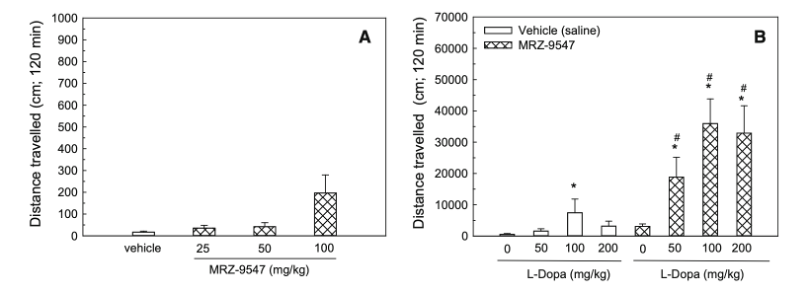
Figure 1: Changes in distance travelled by the animals following treatment with MRZ-9547 A) alone, and B) in combination with L-DOPA.
A second series of experiments examined the effects of MRZ-9547 in rats subjected to profound monoamine depletion through combined treatment with reserpine and α-methyl-p-tyrosine (AMPT). Under these conditions, MRZ-9547 alone produced only modest improvements in locomotor activity and failed to significantly reverse severe hypolocomotion, suggesting that the compound requires at least some residual endogenous dopamine terminals to exert its maximal effects. However, when administered together with L-DOPA, MRZ-9547 significantly enhanced the motor improvements produced by dopamine replacement therapy. Across multiple L-DOPA dose levels, animals receiving the combination treatment demonstrated substantially greater locomotor activity than those receiving L-DOPA alone. These findings indicate that although MRZ-9547 has limited efficacy in the setting of nearly complete dopamine depletion, it can markedly potentiate the therapeutic effects of exogenous dopamine replacement when some dopamine synthesis is restored by L-DOPA administration. This synergistic interaction suggested the possibility that MRZ-9547 could serve as an adjunctive therapy capable of enhancing L-DOPA efficacy in patients with Parkinson’s disease.
Experiments using rats with unilateral 6-OHDA lesions provided further evidence of antiparkinsonian activity. Administration of MRZ-9547 alone produced clear, dose-dependent ipsilateral rotational behavior, a characteristic response associated with presynaptic dopaminergic stimulation in this experimental model. Significant rotational activity was observed at all three tested doses of 25, 50, and 100 mg/kg, with progressively greater numbers of rotations occurring as the dose increased. The highest dose generated nearly five times as many rotations as the lowest effective dose, demonstrating a robust dose-response relationship. Because ipsilateral rotations are typically produced by compounds that enhance dopamine transmission through presynaptic mechanisms, these findings strongly supported the proposed mechanism of action of MRZ-9547 as a dopamine transporter inhibitor. The results also indicated that the compound retained functional activity in partially denervated nigrostriatal pathways, suggesting potential usefulness during the earlier stages of Parkinson’s disease when some dopaminergic terminals remain intact [1].
The interaction between MRZ-9547 and L-DOPA was examined in greater detail using the unilateral lesion model. Surprisingly, MRZ-9547 did not diminish the motor response to L-DOPA despite producing ipsilateral rotations on its own. Instead, when combined with a therapeutically effective dose of 25 mg/kg L-DOPA, MRZ-9547 tended to enhance contralateral rotational behavior, indicating an overall increase in antiparkinsonian efficacy. Although the enhancement did not consistently reach statistical significance beyond the effect of L-DOPA alone, the combined treatment produced greater overall motor responses than either drug administered individually. In contrast, MRZ-9547 failed to enhance the effects of a subtherapeutic L-DOPA dose, indicating that the compound did not exhibit a strong L-DOPA dose-sparing effect under these experimental conditions. Additional six-hour rotation experiments demonstrated that once the effects of L-DOPA diminished through metabolism and elimination, the behavioral response gradually shifted toward the ipsilateral rotations produced by MRZ-9547 itself. These observations suggested that MRZ-9547 may prolong or complement the therapeutic actions of L-DOPA while maintaining its own independent dopaminergic activity after L-DOPA concentrations decline.
One of the most clinically important findings involved the effects of MRZ-9547 on L-DOPA-induced dyskinesia. Rats chronically treated with L-DOPA developed characteristic abnormal involuntary movements involving axial, limb, and orolingual muscle groups, closely resembling peak-dose dyskinesias observed in patients with Parkinson’s disease. When MRZ-9547 was administered together with L-DOPA, no significant changes were observed in either the severity or duration of these abnormal involuntary movements. Dyskinesia scores remained nearly identical between animals receiving L-DOPA alone and those receiving the combination therapy throughout the entire three-hour observation period. This finding is particularly noteworthy because many dopaminergic medications capable of enhancing motor function also exacerbate dyskinesias. The absence of increased dyskinesia suggests that MRZ-9547 may improve motor symptoms without worsening one of the most disabling complications associated with chronic L-DOPA treatment, thereby enhancing its potential therapeutic value as an adjunctive medication [1].
Brain microdialysis experiments demonstrated that MRZ-9547 readily penetrated the central nervous system and achieved pharmacologically relevant concentrations within the striatum. Following administration of 50 mg/kg, extracellular brain concentrations reached approximately 9 μM, with peak concentrations occurring around eighty minutes after injection. The compound exhibited a relatively long elimination half-life of approximately 170 minutes, indicating sustained central nervous system exposure. Importantly, simultaneous administration of MRZ-9547 and L-DOPA produced no detectable pharmacokinetic interactions. Neither drug altered the brain concentrations, peak levels, time to peak concentration, elimination half-life, nor overall exposure of the other compound. These findings established that the enhanced behavioral responses observed during combination treatment resulted from pharmacodynamic interactions at the level of dopamine neurotransmission rather than altered drug absorption, distribution, metabolism, or elimination. The favorable pharmacokinetic profile further supports the potential clinical utility of MRZ-9547 by demonstrating effective brain penetration and prolonged duration of action without interfering with established L-DOPA pharmacokinetics [1].
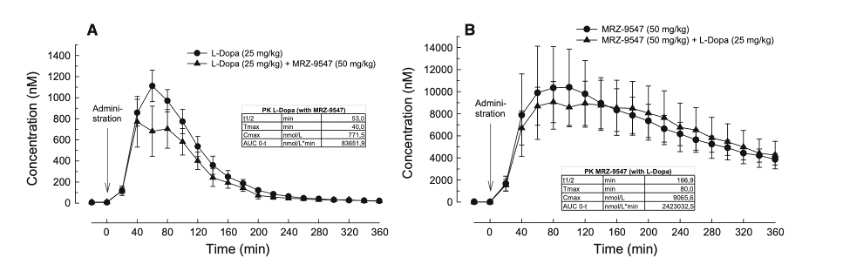
Figure 2: A) Effects of MRZ-9547 on L-DOPA concentrations in the brain and B) effects of L-DOPA on MRZ-9547 concentration in the brain.
Overall, the investigators concluded that MRZ-9547 possesses meaningful antiparkinsonian properties that may be particularly valuable during the earlier stages of Parkinson’s disease, when sufficient dopaminergic terminals remain to permit enhancement of endogenous dopamine signaling. The compound consistently improved motor deficits in several validated animal models, enhanced selected therapeutic effects of L-DOPA, readily crossed the blood-brain barrier, and exhibited prolonged pharmacological activity without producing pharmacokinetic interactions with L-DOPA. Most importantly, MRZ-9547 did not increase L-DOPA-induced dyskinesia despite augmenting dopaminergic function, distinguishing it from some other dopamine transporter inhibitors. The authors therefore concluded that MRZ-9547 represents a promising candidate for adjunctive treatment of Parkinson’s disease, particularly for addressing fatigue and hypokinesia while preserving the efficacy of L-DOPA without increasing dyskinetic complications. They recommended that future studies evaluate the compound in additional Parkinson’s disease models with higher translational value and ultimately determine whether these favorable preclinical findings translate into meaningful clinical benefits in patients [1].
2) The study conducted by Sommers et al demonstrated that MRZ-9547 is a potent and selective DAT inhibitor that significantly enhanced motivation and effort-related behavior in rats. Across a series of molecular, neurochemical, and behavioral experiments, MRZ-9547 consistently increased animals’ willingness to work for food rewards and shifted effort-based decision making toward high-effort, high-reward choices. Compared with its less active stereoisomer MRZ-9546 and several clinically available stimulants, including modafinil, methylphenidate, and d-amphetamine, MRZ-9547 generally produced the largest improvements in PR performance. These findings suggest that MRZ-9547 enhances motivational processes rather than simply increasing locomotor activity, supporting its potential as a therapeutic agent for disorders characterized by fatigue, apathy, anergia, and reduced effort expenditure [2].
The initial pharmacological experiments confirmed that MRZ-9547 possessed the expected molecular characteristics of an effective dopamine transporter inhibitor. In receptor binding assays, MRZ-9547 exhibited substantially greater affinity for the dopamine transporter than its l-enantiomer MRZ-9546, demonstrating approximately four-fold greater potency. Functional dopamine uptake studies similarly showed that MRZ-9547 more effectively inhibited dopamine reuptake than MRZ-9546 while displaying relatively high selectivity for DAT over other monoamine transporters. The only notable secondary interaction occurred at the norepinephrine transporter, where substantially higher concentrations were required to produce inhibition. These findings established that MRZ-9547 primarily acts by blocking dopamine reuptake, thereby increasing extracellular dopamine availability within dopaminergic pathways involved in motivation and reward processing.
Microdialysis experiments confirmed that MRZ-9547 readily entered the brain and produced sustained central nervous system exposure. Following intraperitoneal administration, extracellular brain concentrations increased in a dose-dependent manner, with measurable drug levels appearing within approximately thirty minutes and reaching peak concentrations between sixty and one hundred twenty minutes depending on the administered dose. Elimination half-life also increased with higher doses, indicating prolonged brain exposure. Neurochemical analyses demonstrated that MRZ-9547 significantly elevated extracellular dopamine concentrations within the striatum while simultaneously reducing concentrations of 3,4-dihydroxyphenylacetic acid (DOPAC), a principal dopamine metabolite. This pattern of increased extracellular dopamine together with reduced dopamine metabolism is consistent with effective inhibition of dopamine reuptake through blockade of the dopamine transporter. The time course of dopamine elevation closely paralleled the onset and duration of the behavioral effects observed in subsequent experiments, supporting a direct relationship between dopamine transporter inhibition and enhanced motivation [2].
Behavioral testing using the standard progressive ratio task demonstrated robust dose-dependent improvements in motivation following MRZ-9547 administration. Animals treated with MRZ-9547 achieved significantly higher breakpoints than vehicle-treated controls, indicating a greater willingness to continue responding as the effort required to obtain food rewards progressively increased. Both the 50 mg/kg and 100 mg/kg doses produced highly significant increases in breakpoints, whereas the lower 25 mg/kg dose produced more modest improvements. In addition to increasing breakpoints, MRZ-9547 significantly increased the number of lever presses completed per minute without increasing perseverative responding or altering response latency after reward delivery. These findings suggest that MRZ-9547 specifically enhanced motivated responding rather than causing generalized hyperactivity, compulsive behavior, or nonspecific increases in motor output. Because breakpoint is widely considered an indicator of the amount of effort an animal is willing to invest to obtain a reward, these results demonstrate that MRZ-9547 substantially increased motivational drive.
The progressive ratio/chow feeding choice task provided additional evidence that MRZ-9547 selectively altered effort-related decision making. In this paradigm, untreated rats typically shifted toward freely available laboratory chow rather than continuing to perform increasingly demanding lever-pressing requirements for preferred food pellets. Administration of MRZ-9547 significantly altered this behavioral choice. Treated animals completed substantially higher response ratios before abandoning lever pressing and consumed significantly less freely available chow than vehicle-treated controls, indicating an increased preference for the more effortful but highly rewarding option. These effects were observed across all tested doses, with the highest dose producing the greatest enhancement of high-effort responding. Interestingly, although MRZ-9547 also reduced consumption of freely available food pellets during separate consumption testing, total food intake remained largely unchanged, suggesting that the increased effort expenditure could not simply be explained by changes in appetite or food preference. Instead, the results indicate that MRZ-9547 specifically increased willingness to work for reward despite requiring substantially greater behavioral effort [2].
Comparison experiments demonstrated that MRZ-9547 generally outperformed established psychostimulant medications. When compared directly with modafinil, only MRZ-9547 significantly increased breakpoints during both the standard progressive ratio task and the progressive ratio/chow choice task. Modafinil failed to improve either measure despite being administered at behaviorally active doses. Similar comparisons with methylphenidate showed that although methylphenidate modestly increased progressive ratio performance, its effects were consistently smaller than those produced by MRZ-9547. Both compounds reduced pellet consumption during the consumption test, suggesting some appetite-suppressing effects, however, MRZ-9547 produced substantially greater increases in motivated response. Comparisons with d-amphetamine yielded similar findings. While amphetamine moderately increased willingness to work for food rewards, MRZ-9547 consistently produced larger improvements in effort-related responding and greater selection of the high-effort behavioral option. Collectively, these comparative experiments established MRZ-9547 as the most effective compound among those tested for enhancing motivated behavior.
Evaluation of MRZ-9546 demonstrated that the stereoisomer retained only limited biological activity. Although MRZ-9546 produced statistically significant increases in progressive ratio breakpoints and modest improvements in effort-related choice behavior, these effects were considerably smaller than those observed with MRZ-9547. Likewise, MRZ-9546 produced only moderate reductions in chow consumption and slightly decreased pellet intake during free-feeding tests. These findings closely paralleled the molecular pharmacology data showing substantially weaker dopamine transporter inhibition by MRZ-9546 and confirmed that the enhanced behavioral activity of MRZ-9547 was directly related to its greater potency at the dopamine transporter [2].
The investigators interpreted these findings as evidence that MRZ-9547 enhances motivational processes through stimulation of mesoaccumbens dopaminergic pathways responsible for regulating effort expenditure and cost-benefit decision making. They emphasized that progressive ratio performance reflects willingness to expend effort rather than reward perception alone and noted that nucleus accumbens dopamine transmission has been consistently implicated in this behavior. Although MRZ-9547 produced some reduction in food consumption, the pattern of behavioral results differed markedly from simple appetite suppression, indicating that motivational enhancement represented the primary pharmacological effect. Furthermore, the relatively slow rise and prolonged persistence of extracellular brain concentrations suggested that MRZ-9547 may possess lower abuse potential than rapidly acting dopamine transporter inhibitors such as cocaine [2].
Overall, the investigators concluded that MRZ-9547 is a highly effective dopamine transporter inhibitor that markedly increases effort-related responding and motivates animals to choose high-effort, high-reward behavioral strategies. Compared with MRZ-9546, modafinil, methylphenidate, and d-amphetamine, MRZ-9547 consistently produced the greatest enhancement of progressive ratio responding and effort-based decision making. Because motivational impairments such as fatigue, apathy, psychomotor slowing, and anergia are common features of disorders including Parkinson’s disease, major depression, schizophrenia, multiple sclerosis, and chronic inflammatory conditions, the authors proposed that MRZ-9547 may represent a promising therapeutic candidate for treating these symptoms [2].
Disclaimer
**LAB USE ONLY**
*This information is for educational purposes only and does not constitute medical advice. THE PRODUCTS DESCRIBED HEREIN ARE FOR RESEARCH USE ONLY. All clinical research must be conducted with oversight from the appropriate Institutional Review Board (IRB). All preclinical research must be conducted with oversight from the appropriate Institutional Animal Care and Use Committee (IACUC) following the guidelines of the Animal Welfare Act (AWA).
Citations
[1] Dekundy A, Mela F, Hofmann M, Danysz W. Effects of dopamine uptake inhibitor MRZ-9547 in animal models of Parkinson’s disease. J Neural Transm (Vienna). 2015;122(6):809-818. doi:10.1007/s00702-014-1326-8
[2] Sommer S, Danysz W, Russ H, Valastro B, Flik G, Hauber W. The dopamine reuptake inhibitor MRZ-9547 increases progressive ratio responding in rats. Int J Neuropsychopharmacol. 2014;17(12):2045-2056. doi:10.1017/S1461145714000996
MRZ-9547 aka (R)-Phenylpiracetam is sold for laboratory research use only. Terms of sale apply. Not for human consumption, nor medical, veterinary, or household uses. Please familiarize yourself with our Terms & Conditions prior to ordering.


| File Name | View/Download |
| Coming Soon! |  |
VIEW CERTIFICATES OF ANALYSIS (COA)


Reviews
There are no reviews yet.