


Description
Ulotaront HCl Nootropic Powder









| CAS Number | 1310422-41-3 |
| Other Names | Ulotaront HCl; Ulotaront hydrochloride; Ulotaront; SEP-856; SEP856; SEP 856; SEP-363856; SEP 363856; SEP363856 |
| IUPAC Name |
(7S)-4,7-Dihydro-N-methyl-5H-thieno[2,3-c]pyran-7-methanamine hydrochloride
|
| Molecular Formula | C₉H₁₃NOS.ClH |
| Molecular Weight | 219.73 |
| Purity | ≥99% Pure (LC-MS) |
| Liquid Availability | N/A |
| Powder Availability |  N/A |
| Gel Availability | N/A |
| Storage | Store in cool dry environment, away from direct sunlight. |
| Terms | All products are for laboratory developmental research USE ONLY. Products are not for human consumption. |
What is Ulotaront HCl?
Ulotaront is an investigational compound that has gained interest for its potential effects on cognitive function and neurological health through its unique influence on neurotransmitter regulation. Unlike many traditional compounds that primarily target dopamine or serotonin receptors directly, ulotaront acts as an agonist of trace amine-associated receptor 1 (TAAR1) and also interacts with serotonin 5-HT1A receptors, which are involved in regulating mood, cognition, and neural signaling. Through these mechanisms, ulotaront may help improve communication between neurons, support balanced neurotransmitter activity, and influence processes related to attention, memory, and executive function. Research has primarily focused on its potential therapeutic applications for psychiatric and cognitive disorders, where alterations in dopamine and serotonin systems contribute to impaired brain function. Early studies suggest that ulotaront may provide benefits for cognitive and neurological health.
Main Research Findings
1) Treatment with ulotaront was found to decrease symptoms of Parkinson’s disease psychosis without worsening motor function in individuals with cognitive impairments.
2) Administration of ulotaront was shown to activate blood-oxygen level dependent responses elicited by reward, memory, and resting state, in a manner compatible with an indirect modulation of dopaminergic functioning.
Selected Data
1) The study conducted by researchers Isaacson et al investigated ulotaront as a treatment for Parkinson disease psychosis (PDP). The primary goal of the research was to determine whether ulotaront, a trace amine-associated receptor 1 (TAAR1) agonist with serotonin 5-HT1A receptor agonist activity, could reduce symptoms of psychosis in individuals with Parkinson disease without worsening their motor symptoms. Unlike traditional antipsychotic medications that commonly act through dopamine D2 receptor blockade and may negatively affect movement symptoms in Parkinson disease, ulotaront was studied because of its alternative mechanism of action and potential to improve psychosis while avoiding motor decline [1].
Participants eligible for the trial were adults aged 55 years or older who had been diagnosed with idiopathic Parkinson disease according to United Kingdom Parkinson Disease Society Brain Bank criteria and who had developed psychotic symptoms after their Parkinson diagnosis. To qualify, symptoms such as hallucinations or delusions needed to have been present for at least one month, occur at least weekly, and be severe enough to require antipsychotic treatment. Participants also needed specific scores on the Neuropsychiatric Inventory (NPI), showing clinically meaningful hallucinations or delusions, and had to maintain stable doses of their Parkinson disease medications before and throughout the study. Individuals were required to have a Mini-Mental State Examination (MMSE) score above 16 and have a caregiver available to participate in visits and provide information about symptoms.
Patients were excluded if they did not meet diagnostic requirements for Parkinson disease psychosis or if they had conditions that could interfere with the study. Exclusion criteria included previous failure to respond to adequate treatment with two or more antipsychotic drugs within the past year, prior Parkinson-related surgical treatments, recent strokes or uncontrolled neurological disorders, significant medical conditions that limited participation, or suicidal thoughts during screening. These criteria were intended to create a study population in which researchers could more accurately evaluate the effects of ulotaront [1].
The study included a screening and washout period lasting 14 to 28 days, followed by a six-week double-blind treatment period. During the screening phase, patients stopped any existing antipsychotic medications or centrally acting anticholinergic drugs to prevent these medications from affecting the results. Originally, researchers included a two-week placebo lead-in period with brief psychosocial therapy to reduce placebo effects, but this was later removed to reduce the burden placed on patients and caregivers.
Participants who completed screening were randomly assigned in a 2:1 ratio to receive either ulotaront or a placebo. Both patients and researchers remained unaware of treatment assignments throughout the trial to reduce bias. Patients assigned to ulotaront received flexible doses of 25, 50, or 75 mg per day. Treatment began with 25 mg daily for the first week, with increases to 50 mg and later 75 mg if the medication was tolerated. Dose reductions were allowed if safety or tolerability problems occurred [1].
The main measurement of effectiveness was the change from baseline to week six on the Scale for the Assessment of Positive Symptoms for Parkinson Disease (SAPS-PD). This scale evaluates hallucinations and delusions, which are the primary symptoms of Parkinson disease psychosis. Secondary assessments included the percentage of patients achieving 30%, 50%, or complete improvement in SAPS-PD scores, changes in hallucination and delusion subscale scores, Clinical Global Impression of Severity (CGI-S), Neuropsychiatric Inventory scores, and sleep measurements using the Scales for Outcomes in Parkinson Disease Sleep Scale. Safety was assessed through reports of adverse events, serious adverse events, treatment discontinuations, laboratory measurements, vital signs, ECG results, and suicidal ideation monitoring. Researchers also measured Parkinson motor symptoms using the Unified Parkinson Disease Rating Scale (UPDRS) Part III to determine whether ulotaront worsened movement function [1].
2) The study performed by Perini et al examined the effects of ulotaront on brain circuits involved in reward, working memory, and emotional processing was a phase 1 translational investigation designed to better understand the neurological mechanisms of this medication. Ulotaront is a TAAR1 agonist with serotonin 5-HT1A receptor agonist activity that differs from traditional antipsychotic medications because it does not work by blocking dopamine D2 or serotonin 5-HT2A receptors. Since previous research suggested that ulotaront may influence dopamine-related brain activity, researchers used functional magnetic resonance imaging (fMRI) to evaluate how the drug affected brain systems associated with schizophrenia-related symptoms. The study compared ulotaront with placebo and amisulpride, a dopamine D2 receptor antagonist, in healthy individuals with either high or low levels of schizotypy. Schizotypy refers to personality traits that share certain cognitive, genetic, and neurobiological characteristics with schizophrenia, allowing researchers to examine schizophrenia-related brain differences without the complications of active illness or previous antipsychotic treatment [2].
Participants were initially screened online using the Schizotypal Personality Questionnaire (SPQ), which was used to identify individuals with either low schizotypy scores below 10 or high schizotypy scores of 40 or higher. Participants were required to be between 18 and 45 years old. Researchers excluded individuals with current psychiatric disorders using the Structured Clinical Interview for DSM-IV to ensure that participants represented healthy volunteers rather than patients with diagnosed psychiatric illnesses [2].
A total of 133 people were screened, and after exclusions, 105 participants were randomized into treatment groups. Two individuals did not complete the study, and 96 participants had usable fMRI and cognitive task data included in the final analyses. The final group consisted of 51 individuals with low schizotypy and 45 individuals with high schizotypy. Participants were randomly assigned to receive a single dose of placebo, 50 mg ulotaront, or 400 mg amisulpride. Randomization was balanced according to study site and schizotypy category to create groups with similar demographic characteristics. Neither the participants nor researchers involved in assessments knew which treatment each participant received. Two hours after receiving the assigned medication, participants underwent fMRI scanning while completing different cognitive and emotional tasks.
The primary assessment focused on reward processing using the Monetary Incentive Delay (MID) task. This task examined brain activity related to anticipating and receiving rewards or avoiding losses. During the task, participants saw cues indicating whether they could win money, lose money, or experience no monetary change. They then responded quickly to targets, with faster responses leading to gains or preventing losses. Researchers measured blood oxygen level-dependent (BOLD) responses during fMRI scans, focusing especially on the ventral striatum because this brain region is strongly associated with dopamine activity and reward anticipation. Since schizophrenia has been linked to abnormal dopamine signaling and reward processing, researchers predicted that ulotaront would modify activity in these circuits [2].
Working memory was evaluated using the N-Back task, a commonly used test of cognitive function. Participants viewed letters and determined whether each letter matched one shown previously, with difficulty increasing across different task levels. Researchers measured both task performance and fMRI activity in brain regions involved in working memory, including the dorsolateral prefrontal cortex, anterior cingulate cortex, hippocampus, and other cognitive networks. Because working memory impairment is a major feature of schizophrenia, the researchers wanted to determine whether ulotaront affected these brain systems [2].
The study also included an Emotional Test Battery (ETB) to evaluate emotional processing and potential antidepressant-like effects of ulotaront. Participants completed tasks requiring recognition of emotional facial expressions and recall of emotionally positive or negative words. Previous studies have shown that antidepressants can shift emotional processing toward more positive responses, so researchers tested whether ulotaront produced similar effects.
Additional exploratory analyses examined resting state connectivity (RSC) and cerebral blood flow (CBF). Resting state connectivity measured communication patterns between major brain networks, including the default mode network, salience network, and executive control network, all of which have been associated with schizophrenia. Cerebral blood flow was measured using arterial spin labeling to evaluate regional brain activity. Statistical analyses compared treatment groups, schizotypy groups, behavioral performance, and fMRI responses to determine whether ulotaront influenced brain circuits related to schizophrenia symptoms [2].
Discussion
1) The results of the exploratory clinical trial completed by Isaacson et al suggested that ulotaront may provide benefits for reducing symptoms of PDP. A total of 39 patients were enrolled in the study, with 25 randomly assigned to receive ulotaront and 14 assigned to receive placebo. Among participants, 24 received ulotaront and 14 received placebo. During the six-week double-blind treatment period, 60% of ulotaront-treated patients and 78.6% of placebo-treated patients completed the trial [1].
The participants had experienced Parkinson disease for an average of approximately nine years and Parkinson disease psychosis for about 2.4 years. At baseline, the groups were generally similar in disease severity and clinical characteristics. Most patients experienced moderate psychosis symptoms, with hallucinations being more common than delusions. About 36.8% of patients had cognitive impairment based on an MMSE score of 24 or lower. The average duration of treatment exposure was slightly shorter in the ulotaront group compared with the placebo group. Many participants receiving ulotaront were successfully increased to higher doses, with a substantial portion reaching the 75 mg dose during the study.
The primary effectiveness outcome measured changes in SAPS-PD total scores from baseline through week six. Patients receiving ulotaront showed greater numerical reductions in psychotic symptoms compared with placebo-treated patients beginning as early as the first week of treatment, when all patients were receiving only the starting 25 mg dose. This improvement continued throughout the six-week treatment period. At week six, the difference between ulotaront and placebo favored ulotaront, but the difference was not statistically significant. Although the primary endpoint was not statistically significant, additional analyses suggested possible clinical benefits. More patients treated with ulotaront achieved meaningful reductions in symptoms compared with placebo. At week six, a greater proportion of ulotaront-treated patients achieved at least 30% and 50% improvements in SAPS-PD scores. Most notably, complete remission of psychotic symptoms, defined as a 100% improvement in SAPS-PD score, occurred in 25% of patients receiving ulotaront compared with none of the patients receiving placebo [1].
Analysis of specific symptoms showed that improvements were mainly related to hallucinations rather than delusions. SAPS-PD hallucination scores showed a greater numerical reduction with ulotaront compared with placebo, although this difference also did not reach statistical significance. Similar patterns were observed using the Neuropsychiatric Inventory hallucination measurements. Delusion scores showed little difference between the groups, possibly because patients had relatively low levels of delusions at the beginning of the study, making improvement harder to detect [1].
Researchers also examined whether cognitive impairment affected treatment response. Among patients with lower MMSE scores, indicating greater cognitive impairment, ulotaront produced larger numerical improvements in SAPS-PD scores compared with placebo. Patients without cognitive impairment did not show the same degree of improvement. These findings suggested that ulotaront may have stronger potential benefits among patients with Parkinson disease psychosis who also experience cognitive decline.
Additional outcomes showed that ulotaront significantly improved daytime sleepiness compared with placebo, as measured by the SCOPA-Daytime Sleepiness scale. Importantly, ulotaront did not worsen Parkinson motor symptoms. UPDRS Part III motor scores remained stable throughout treatment, suggesting that the medication may reduce psychosis without negatively affecting movement abilities. MMSE scores also remained stable, indicating no evidence of worsening cognitive function during the trial [1].
Safety findings showed that adverse events occurred in both groups. Overall, 72% of ulotaront-treated patients and 85.7% of placebo-treated patients experienced at least one adverse event. Common adverse events with ulotaront included hallucinations, confusion, dizziness, nausea, and falls. Two patients receiving ulotaront experienced serious adverse events, while none occurred in the placebo group. Five patients discontinued ulotaront because of adverse events. Most side effects were mild or moderate, though some severe neuropsychiatric effects occurred more often at higher doses [1].
2) The results of the study by researchers Perini et al demonstrated that ulotaront influenced several brain systems related to reward processing, cognition, and connectivity, supporting evidence that the medication affects neural pathways associated with schizophrenia. Although participants receiving ulotaront showed some increases in drowsiness and mild decreases in task performance, the overall findings suggested that ulotaront altered brain activity in ways consistent with its proposed effects on dopamine-related signaling. Researchers compared outcomes between participants receiving ulotaront, placebo, and amisulpride while also examining differences between individuals with high and low schizotypy traits [2].
During the MID task, participants responded faster during trials involving potential rewards or losses compared with neutral trials, confirming that the task successfully activated motivational systems. Behavioral results showed that participants who received ulotaront had slightly slower reaction times compared with participants receiving placebo or amisulpride. However, this slowing was less than 10% and did not appear to explain the observed changes in brain activity. Functional MRI results showed that the MID task successfully activated expected reward-related regions, including the ventral striatum, insula, and medial orbitofrontal cortex.
The primary findings showed that ulotaront affected reward-processing circuits, particularly within the striatum. Compared with placebo, ulotaront reduced striatal BOLD responses during anticipation of incentives, especially during anticipation of avoiding monetary loss. This supported the researchers’ hypothesis that ulotaront may regulate dopamine-related reward activity. Because abnormal reward signaling and inappropriate assignment of importance to stimuli are believed to contribute to psychotic symptoms in schizophrenia, these findings suggested that ulotaront may influence mechanisms relevant to reducing psychosis. Unlike ulotaront, amisulpride did not produce the same pattern of striatal changes [2].
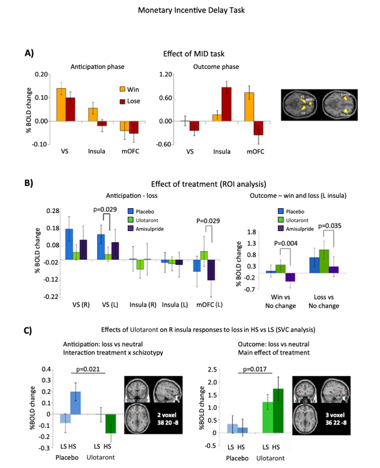
Figure 1: Effects of the MID task and related treatment on BOLD responses in the R insula.
Ulotaront also affected the medial orbitofrontal cortex (mOFC), another region involved in evaluating rewards and decision-making. Under placebo conditions, this region showed reduced activity during anticipation phases, while ulotaront increased activation during both reward and loss anticipation. Researchers suggested that these opposite effects between the striatum and orbitofrontal cortex may indicate that ulotaront changes how the brain assigns motivational importance to cues. These changes could potentially relate to reducing abnormal learning patterns associated with psychotic symptoms.
The insula, a brain region involved in detecting important or emotionally meaningful events, showed important differences between individuals with high and low schizotypy. Participants with high schizotypy showed abnormal right insula responses during anticipation of loss when receiving placebo. Ulotaront reversed this abnormal activation pattern, suggesting that it may normalize altered salience processing. Resting state connectivity findings supported this result because high-schizotypy participants showed reduced connectivity in important brain networks, including the default mode network, anterior salience network, and executive control network. Ulotaront specifically improved reduced connectivity within the anterior salience network, especially involving the insula [2].
During the N-Back working memory task, participants receiving ulotaront performed with lower accuracy compared with placebo and amisulpride groups. Researchers suggested that this could partly relate to the sedating effects of ulotaront, as many participants reported drowsiness. Functional imaging showed that the working memory task activated expected cognitive regions, including the dorsolateral prefrontal cortex and anterior cingulate cortex. Although ulotaront did not significantly alter all predicted working memory regions, it affected hippocampal activity by reducing the normal deactivation seen during cognitive tasks. Since abnormal interactions between the hippocampus and prefrontal cortex have been associated with schizophrenia, researchers considered these effects potentially relevant to ulotaront’s therapeutic mechanisms [2].
Results from the Emotional Test Battery showed that ulotaront did not demonstrate antidepressant-like effects. Participants receiving ulotaront responded more slowly during emotional recognition tasks and recalled fewer words compared with placebo, regardless of whether the words were positive or negative. Unlike some antidepressant medications, ulotaront did not create a positive emotional bias in memory or perception.
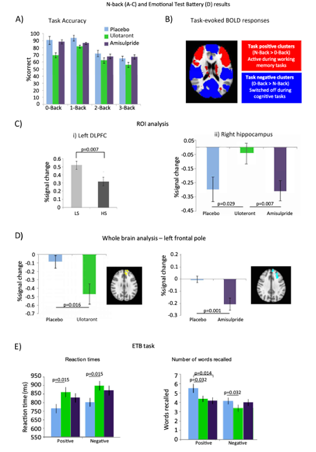
Figure 2: Results of the N-back test and treatment on BOLD responses.
Cerebral blood flow analyses showed that ulotaront produced region-specific changes in brain activity. Compared with placebo, ulotaront reduced blood flow in areas including the posterior cingulate cortex, right thalamus, and dorsolateral prefrontal cortex. These effects were stronger in individuals with high schizotypy, suggesting that ulotaront may have greater effects in individuals with schizophrenia-related brain characteristics.
Overall, the findings indicated that ulotaront modified brain responses involved in reward, salience processing, working memory, and connectivity. Although sedation may have influenced some behavioral results, the study provided evidence that ulotaront engages brain circuits relevant to schizophrenia through mechanisms different from traditional dopamine-blocking antipsychotic drugs. These findings helped support later clinical studies evaluating ulotaront as a potential schizophrenia treatment [2].
Disclaimer
**LAB USE ONLY**
*This information is for educational purposes only and does not constitute medical advice. THE PRODUCTS DESCRIBED HEREIN ARE FOR RESEARCH USE ONLY. All clinical research must be conducted with oversight from the appropriate Institutional Review Board (IRB). All preclinical research must be conducted with oversight from the appropriate Institutional Animal Care and Use Committee (IACUC) following the guidelines of the Animal Welfare Act (AWA).
Citations
[1] Isaacson SH, Goldstein M, Pahwa R, et al. Ulotaront, a Trace Amine-Associated Receptor 1/Serotonin 5-HT1A Agonist, in Patients With Parkinson Disease Psychosis: A Pilot Study. Neurol Clin Pract. 2023;13(4):e200175. doi:10.1212/CPJ.0000000000200175
[2] Perini F, Nazimek JM, Mckie S, et al. Effects of ulotaront on brain circuits of reward, working memory, and emotion processing in healthy volunteers with high or low schizotypy. Schizophrenia (Heidelb). 2023;9(1):49. Published 2023 Aug 7. doi:10.1038/s41537-023-00385-6
Ulotaront HCl is sold for laboratory research use only. Terms of sale apply. Not for human consumption, nor medical, veterinary, or household uses. Please familiarize yourself with our Terms & Conditions prior to ordering.
| File Name | View/Download |
| Coming Soon! |  |
VIEW CERTIFICATES OF ANALYSIS (COA)

Reviews
There are no reviews yet.